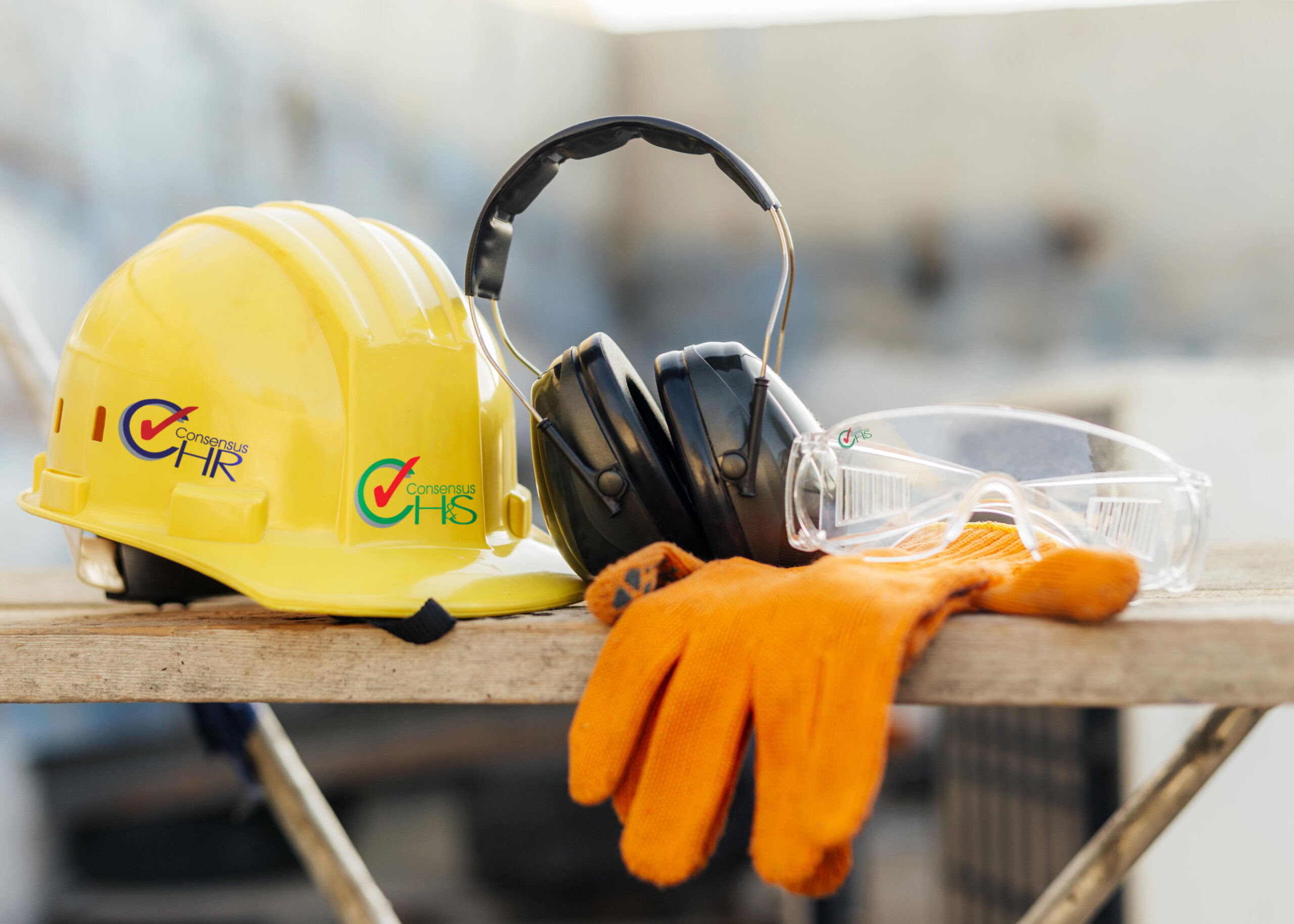
At Consensus HR, we are continually asked about many areas of Health & Safety and one area that recently raised its head was Lone working: protect those working alone. This detailed information from the Health & Safety Executive (HSE) gives some very valuable guidance and tools:
Lone workers can be at greater risk of harm as they may not have anyone to help or support them if things go wrong.
Employers should provide training, supervision, monitoring and support for those working alone.
Are you planning a visit to the workplace from the man in red this year?
What’s a bit of festive fun without careful consideration, planning, risk assessment and documentation? Here are just a few items to remember:
You will, of course, need to decorate your workplace appropriately for Santa’s visit. Please ensure that any overhead decorations are erected by a qualified person with ‘Working at Height’ training and certification. An HSE-approved stepladder must be used and all fairy lights PAT-tested by an electrician.
If your premises have a chimney and fireplace, they present the ideal point of entry for your guest. Therefore, it is essential that a full Fire Risk Assessment is carried out to ensure that he will not meet with undue injury on his descent.
Assuming Santa’s safe arrival, and before he proceeds through your office with his large sack of presents, do remember to risk-assess the situation by interviewing Santa on the extent of his manual handling training. If none has been undertaken, you may want him to sign a document, waiving you of all responsibility should he injure his back while lifting on your premises.
Undoubtedly, your team will have set aside mince pies and countless Quality Streets for Santa to indulge in during his brief visit. But it must be borne in mind that such sweet treats can pose a choking hazard. Therefore, please ensure a trained first aider is always available.
Finally…
We hope you have enjoyed this post, all in fun, of course!
All of us at Consensus HR wish you a wonderful Christmas, and all the very best for 2024.
Contact us now
We hope you have a Merry Christmas and a Happy New Year 2024 but should you need any HR help, do not hesitate to contact us.
The Christmas season is upon us! Here’s some celebratory cheer, with thanks to many Twitter confessions from office Christmas partygoers around the UK. Enjoy these examples of when sensible HR guidance has made way for festive workplace shenanigans …
Professional Relationships
Professional relationships in the workplace that embody trust, respect, self-awareness, inclusion and open communication should be encouraged and facilitated wherever possible.
Confession of a Festive Party-Goer #1:
“I told pretty much the entire team that I hated them.”
Trust and Communication
Mutual trust and exceptional communication in the workplace is achievable through creating strong company values, setting clear boundaries and expectations, and encouraging effective internal communication.
Confession of a Festive Party-Goer #2:
“My colleagues tricked me into thinking it was a fancy dress party. I showed up to a black tie event dressed as a Christmas pudding.”
Team Building
Great relationships between managers and employees are just one of the keys to building and maintaining an efficient, productive and happy workplace.
Confession of a Festive Party-Goer #3:
“The queues were too long for the toilet so I went outside to wee behind a wall. Bumped into my boss doing the exact same thing.”
Training and Development
It is vital to build a skills-based approach to talent development, for unlocking employee potential and creating a more inclusive workplace.
Confession of a Festive Party-Goer #4:
“Tried to be really cool and do that ‘pulling the tablecloth from beneath the glasses’ trick. Completely failed, smashed everything. Red wine went everywhere.”
Privacy
An employee has a right to a private life, and therefore should be able to enjoy a “reasonable expectation of privacy”. Likewise, employees should be encouraged to leave their private selves at home, and to only bring their professional selves to the workplace.
Confession of a Festive Party-Goer #5:
“Proposed to my girlfriend in front of everyone. She said no.”
Social Media Policy
It is essential to have a solid social media policy, informing all employees of expectations and codes of conduct when it comes to posting online.
Confession of a Festive Party-Goer #6:
“I woke up to like a million messages and missed calls. Turns out I’d put inappropriate pictures of people (really drunk and wearing hardly anything) all over Facebook.”
Health & Safety
For any workplace party, it is advisable to appoint an appropriate person to monitor health and safety, identify dangerous situations, and assess and report potential risk. They also need to check any control measures put in place periodically.
Confession of a Festive Party-Goer #7:
“I jumped up onto my friend’s back but we fell over and she broke her arm.”
Don’t worry, everything will turn out just fine this year. Probably.
Merry Christmas 2023 to all our readers! The team at Consensus HR hopes you all have a fantastic festive period and a Happy New Year 2024.
Contact us now
We hope you have a Merry Christmas and a Happy New Year 2024 but should you need any HR help, do not hesitate to contact us.
This is an extremely upsetting story in relation to a young father who lost his life due to not following the correct Health & Safety when using a Forklift Truck which resulted in the loss of his life. Health & Safety is there for a reason and is not optional and must be followed at all times or the company / employee will face the consequences. The Health & Safety Executive have written a great article below and have some very useful information, available within this article.
The mother of a man who was killed when the forklift truck he was driving overturned says she still feels angry as he ‘simply went to work and didn’t come home.’
Jamie Anderson
Jamie Anderson was killed on 4 June 2019, when the forklift truck he was operating overturned at a depot in Newark.
The 35-year-old father of one, was found in the car park trapped under the roll cage of the vehicle. He had been using a counterbalance forklift truck to move waste material when it clipped a kerbstone at the edge of the roadway and overturned. He was not wearing a seatbelt.
His mum Sarah Anderson, a care assistant from Newark, said: “No mother should lose a child and for Jamie’s son Harley he has lost a loving father.
“As a family we have gone through all emotions, and I still feel angry as Jamie simply went to work and didn’t come home. This should not have happened.
“He was a happy-go-lucky boy and would do anything for anyone. It’s the everyday things that remind me of him and I miss his smile and blue eyes. He’s missed so much.”
An investigation by the Health and Safety Executive (HSE) found that The Barcode Warehouse Ltd failed to enforce the use of seatbelts by forklift truck operators. They should have properly risk assessed the use of forklift trucks on their premises and enforced the use of seatbelts. Instead, it was left to individuals to choose whether to wear a seatbelt or not.
At Nottingham Magistrates’ Court on 8 November the Barcode Warehouse Ltd of Telford Drive, Newark pleaded guilty to breaching Section 2(1) of the Health & Safety at Work Act 1974. They were fined £500,000 and agreed to pay costs of £7,039.55.
Speaking after the hearing HSE inspector, Tim Nicholson said: “This tragic incident led to the avoidable death of a young man. Jamie’s death could easily have been prevented if his employer had acted to identify and manage the risks involved and enforced the use of seatbelts by forklift truck operators.”
Contact us now
We hope you have a Merry Christmas and a Happy New Year 2024 but should you need any HR help, do not hesitate to contact us.
Christmas is just around the corner! This means many organisations will be planning their annual Christmas party. Alongside unpacking the tinsel and choosing (or avoiding) a turkey menu, businesses must also prepare for the chance of employee misconduct.
‘Christmas parties may seem like the ideal opportunity for organisations to allow their staff to let their hair down and dance the night away with their colleagues,’ says Matthew Chilcott of Consensus HR. ‘However, alcohol consumption within a relaxed social atmosphere can foster situations that may not occur in the office.
‘Employers should note that events are more than social gatherings. While they are intended to be informal and fun occasions they are also official, company-organised events. Therefore, the party is an extension of the working environment.’
Legally, employers have a duty to protect their employees’ health, safety and welfare. Organisations can be liable for actions committed by employees in the course of their employment, unless they can demonstrate that ‘reasonable steps’ were taken to prevent these actions. This includes forms of misconduct at company-organised events … such as a Christmas party. Therefore, the organisation may be responsible for its employees’ actions if they behave inappropriately. Some examples of what might constitute gross misconduct at a work Christmas party include physical violence, bullying, obscene behaviour and harassment.
Organisations can also be liable for misconduct that takes place within after-party drinks. Although the company may not officially organise these, liability can still arise if it can be established that an employee’s conduct was sufficiently connected to their work position.
In the Court of Appeal case of Bellman v Northampton Recruitment, an employer was held vicariously liable when the managing director seriously assaulted an employee at a gathering after the Christmas party. Even though the impromptu drinks were not part of the company event, this ruling was decided upon. The Court of Appeal found that the manager acted within his management capacity.
Whilst organisations want staff to have fun at a party, provisions should be in place to ensure behaviour doesn’t get out of hand. To this end, it is highly advisable to implement a policy which addresses office parties and other work-related social events. This should outline that staff have a duty to behave responsibly at all times. In addition, individuals should be reminded that the organisation’s rules on acceptable behaviour apply at the event and that incidents of misconduct will be treated seriously.
If inappropriate action is reported, swift action should be taken to deal with it in line with company policy.
Contact us now
To check that your organisation provides adequate duty of care to its employees, have an informal chat with the Consensus HR team. Our expert guidance can help reassure you that you’ve taken steps to ensure everyone can enjoy the festive season safely,
In our current Monthly recap HR blog Newsletter – October 2023 we have:
Former male ‘period dignity officer’ settles discrimination case.
More workers quit over climate.
Sexism in the City inquiry begins.
Lidl worker awarded £50,000 in sexual harassment case.
Acas says companies should provide menopause awareness training for managers.
UK migration advisers call for tighter foreign worker rules.
NHS staff granted ‘safe space’ powers to speak out about mistakes.
Former male ‘period dignity officer’ settles discrimination case | Consensus HR | Herts, Beds
A male “period dignity officer” who lost his job after a global backlash has settled his sex discrimination case out of court. Jason Grant, a former personal trainer, sued the partnership that hired him last year. The £35,000-a-year role was abolished weeks later after claims of threats and abuse.
More workers quit over climate | Consensus HR – Herts
A growing number of workers are making the decision to walk out of companies whose environmental values don’t align with their own. According to research by carbon removal marketplace Supercritical, 35% of UK office workers surveyed said they were willing to quit their jobs over weak climate action from their employers.
Sexism in the City inquiry begins | Consensus HR – Herts, Beds
An inquiry into Sexism in the City begins today and will examine whether the position of women in financial services has changed in the past five years. The Financial Conduct Authority and the Prudential Regulation Authority are also looking at the issue and are considering proposals for organisations to be more transparent about their diversity and inclusion practices
World Mental Health Day was marked on 10 October and has been celebrated for over 30 years. However, while awareness and acceptance of stress and mental health may be increasing, action – particularly prevention – is not.
Lidl worker awarded £50,000 in sexual harassment case | Consensus HR – Herts, Beds.
A tribunal has ruled in favour of Maddie Hunter, a former teenage assistant at a Lidl supermarket in Oxfordshire who was sexually harassed by the store’s deputy manager. Hunter was subjected to inappropriate comments and advances, and when she complained, she was told to treat it as a compliment.
Acas says companies should provide menopause awareness training for managers. | Consensus HR – Herts, Beds
The Advisory, Conciliation and Arbitration Service (Acas) says companies should provide awareness training for managers about the menopause. Advice for companies includes making practical changes at work to help staff manage their symptoms, such as the availability of cold drinking water and temperature control, and how to handle the issue “with sensitivity.” Susan Clews, chief executive of Acas, said: “British businesses overwhelmingly feel that it is important to support women experiencing menopause at work
UK migration advisers call for tighter foreign worker rules | Consensus HR – Herts, Beds
The UK’s Migration Advisory Committee (MAC) on Tuesday recommended abolishing one of the main routes for businesses to hire migrant workers in sectors where there are severe staff shortages, arguing that the current system was liable to drive down wages and leave workers open to exploitation.
NHS staff granted ‘safe space’ powers to speak out about mistakes | Consensus HR – Herts, Beds
NHS staff will be able to speak out about mistakes without fear of reprisal for the first time, thanks to the Health Services Safety Investigations Body (HSSIB). The HSSIB has been granted “safe space” powers, meaning that any testimony or evidence given to it will not be handed over to another agency unless the High Court rules that it must.
Research from Capital One has found that 87% of remote workers regularly look after their children while trying to do their day job, with 85% of remote-working parents having to work in the same room as their children. The study shows that parents working from home are also cleaning (56%), cooking (55%), helping with homework (44%) and doing the weekly food shop (44 %). The Capital One research shows that 91% of parents find it stressful juggling work duties and parental responsibilities and 37% are able to concentrate more on their work when in the office full-time. It was also shown that 64% of working parents have seen covering childcare costs become more difficult amid the cost-of-living crisis. Adam Myers of HR consultancy Stellamar says the findings point to an area of concern over remote and hybrid working, saying: “It is important to remember that if people are working at home, then they should be working, and if they are being carers to young children in particular, how much work is actually happening?”
Our HR comment / advice – 87% of staff mix WFH with childcare | Consensus HR | Herts, Beds
Matthew P Chilcott, FCIPD, ACEL, Owner of Consensus HR comments: “This is an interesting article in the Daily Mail in relation to parents working from home and having to juggle their work responsibilities with their parenting duties at the same time which must be extremely hard with a detriment to one or the other as shown in the statistics. At Consensus HR we have had to support businesses and their employees on a number of occasions when it has come to parenting and work and finding suitable childcare. Unfortunately, this can be a very complicated scenario for a business when it starts to affect their work and the business and has to be managed correctly to best practice and the law or could result in drastic financial, reputable and legal problems.”
Contact us now
If you run a business and have a team and wish to be able to speak to a HR consultant when dealing with any HR / Employment areas, give us a non-obligatory call now – 01438 576750
‘Consensus HR – Helping companies take the pain our of managing people whilst preventing people problems.”
A growing number of workers are making the decision to walk out of companies whose environmental values don’t align with their own. According to research by carbon removal marketplace Supercritical, 35% of UK office workers surveyed said they were willing to quit their jobs over weak climate action from their employers. Climate campaigner Paul Polman says workers today are far more climate-aware than in the past and want to give their time and talent to companies that share their values. Climate quitters can be a powerful form of lobbying, as their public quitting can create a PR problem for companies and push them to take action. However, some workers believe staying in a job can also drive change and put pressure on companies to move in sustainable directions. Separate research by KPMG shows 20% of workers said they’d turned down a job offer when a company’s ESG commitments didn’t align with their personal values. This number rose to 33% for 18-to-24-year-olds.
Our HR comment: More workers quit over climate | Consensus HR – Herts, Beds
Matthew P Chilcott, FCIPD, ACEL, Owner of Consensus HR comments: “I was amazed to see these statistics in a recent BBC article which demonstrates that applicants are now actively acting when the company they work for or are considering applying to, does not demonstrate climate action. Many of our clients now take positive action in the workplace with recycling and have an environmental policy to adhere to in this ever-changing world covering areas such as recycling, energy consumption, making use of natural light, insulation, using environmentally friendly products and many more.”
Contact us now
If your business would like to introduce an Environmentally Friendly Policy to its workforce and to demonstrate your commitment to the environment, give us a call now.
NHS staff will be able to speak out about mistakes without fear of reprisal for the first time, thanks to the Health Services Safety Investigations Body (HSSIB). The HSSIB has been granted “safe space” powers, meaning that any testimony or evidence given to it will not be handed over to another agency unless the High Court rules that it must. The body aims to help staff feel safe in speaking honestly about mistakes and understanding how to prevent them. The HSSIB can enter and inspect hospitals, seize documents and equipment, and compel individuals and organisations to answer questions. It replaces the Healthcare Safety Investigation Branch. Sir Bernard Jenkin MP, who chaired a parliamentary committee that backed the idea of legal protection, said: “It is the real catalyst for breaking the hold of the traditional blame culture in healthcare. People make mistakes that are part of a failing safety system, but rarely because of deliberate negligence or carelessness.”
Our HR comment: – NHS staff granted ‘safe space’ powers to speak out about mistakes | Consensus HR – Herts, Beds
Matthew P Chilcott, FCIPD, ACEL, Owner of Consensus HR comments: “Following the stories we have heard recently regarding mistakes made in the NHS and their severe consequences, it is great to see this new scheme allowing a ‘safe space’ to give information without fear of it going to a third party unless the High Court rules it must. In any organisation it is vital that all members of the team feel confident in being able to express mistakes to the team and management and a culture is developed where they learn from their mistakes and make amendments to procedures etc, so that the same mistake does not happen again. This is why at Consensus HR; we ensure our clients have set Policies & Procedures / Standards in place for all areas of the business and their teams and that then development of their teams works in conjunction with them, and the appropriate action taken should anybody no meet them such as further development or disciplinary action.”
Contact us now
If you wish to set up adequate Policies & Procedures / Standards for your business and teams, give us a call now for a non-obligatory chat. “Consensus HR – Helping companies take the pain out of managing people whilst Preventing People Problems.”
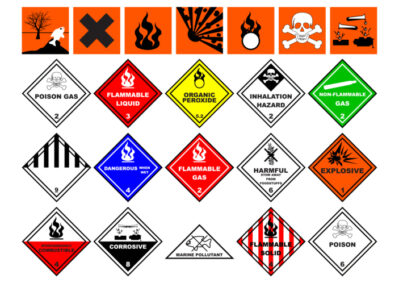
Our COSHH Safe Handling Chemicals poster also provides crucial guidance on how to handle chemicals safely in your workplace, including a useful hazardous signs check.
Employers must provide welfare facilities and a working environment that’s healthy and safe for everyone in the workplace, including those with disabilities.
Employers are also required to provide enough toilets and washbasins for those expected to use them. Follow our guidance for toilets and washing facilities
Here are a few of our previous Health & Safety blogs which businesses and owners should be fully aware off and actioning:
Between the 9 and 15 October 2023, Baby Loss Awareness Week is marked. This week is a time for those affected to come together in remembrance of their lost loved ones and raising awareness of the thousands affected by baby loss each year.
Workplace support
How an individual deals with baby loss will be unique to them, shaped by their journey to becoming pregnant and the circumstances of the loss. Because of this, it is important not to treat all those impacted by this the same, but instead treat them as individuals and be guided in how they wish to be supported.
That being said, there are some basic measures employers can put in place to support their staff, such as making counselling available to employees, either via an Employee Assistance Programme (EAP) provider or directly with a local counselling service.
Employers should also ensure their managers are well trained in dealing with these conversations sensitively. They may get actively involved in the delivery of support, or act as a signpost to resources that either the organisation or external sources offer.
Parental Bereavement Leave
Parental Bereavement Leave and Pay is available to parents whose child dies under the age of 18, or is stillborn after 24 weeks. This applies regardless of the employee’s length of service.
Parental Bereavement Leave can be taken as either:
two weeks together
two separate weeks
one week alone
The leave can start on or after the death or stillbirth and must finish within 56 weeks of the death or stillbirth. If Parental Bereavement Leave is interrupted by another type of statutory leave, such as a pre-arranged period of Shared Parental Leave, any remaining Parental Bereavement Leave can be taken after the other leave has ended.
Maternity Leave
In cases of stillbirth after 24 weeks or where the baby was born living at any point in the pregnancy, both Ordinary and Additional Maternity Leave is still available. This means the employee may take the full 52 weeks of leave they are entitled to, starting from the day after the birth.
However, they may wish to bring forward their return date (or they may not). The normal notice rules for altering a return date from Maternity Leave will apply (ie 28 days written notice), although employers may use their discretion to waive this, given the circumstances of the situation.
Paternity Leave
Paternity is also available where the baby is stillborn after 24 weeks, or born living at any point in the pregnancy.
Shared Parental Leave
To take this leave, it must have been booked before the baby died, which will have involved the curtailing of maternity leave in order to ‘share’ leave. As such, it is unlikely that this leave will have been arranged where the baby is lost early on in the pregnancy. Employers may therefore decide to use their discretion to allow some other form of leave to be taken. Where the employer has exercised their discretion to do this, statutory shared parental leave pay will not be payable.
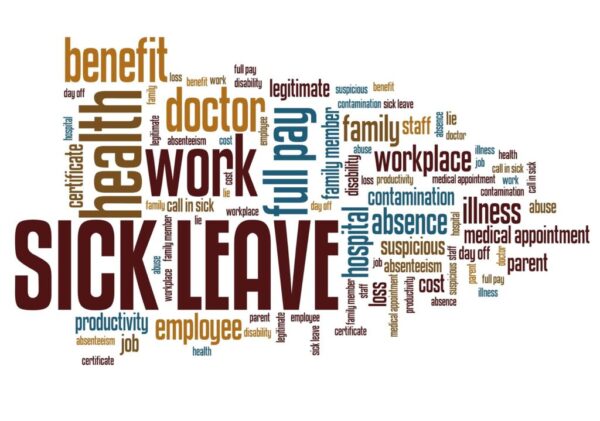
Sick Leave
Losing a child can be devastating, and the employee may be too unwell to work. If this is the case, the usual organisational sickness rules will apply, i.e. sick pay and certification.
A note on miscarriage
Under the Equality Act 2010, both sex and pregnancy and maternity are protected characteristics as under section 4. This protection continues for two weeks after a miscarriage.
Employment Law Case:
In Stokes v Glenham Property Management Ltd, the claimant lost her baby via miscarriage. She was absent from work on pre-booked annual leave, and was then signed off work before returning to work, taking her over two weeks since the miscarriage.
Shortly after, the claimant was dismissed via a letter, stating that she was “not fit to complete [your] role” due to absence, leading to a claim of discrimination. Finding for the claimant, the tribunal recognised that whilst the two-week time limit had ended at the point of dismissal, nevertheless this was sex discrimination by reason of dismissal due to the miscarriage, which is unique to the female sex.
Contact us now
If you run a business and just want to be able to get on with what you know best and need some support / guidance of HR / Employment Law in the workplace, give us a call now.
Yesterday was World Mental Health Day – 10th October and the Health & Safety Executive as part of their Working Minds Campaign have written some great advice below:
World Mental Health Day was marked on 10 October and has been celebrated for over 30 years. However, while awareness and acceptance of stress and mental health may be increasing, action – particularly prevention – is not.
This week, HSE’s Working Minds campaign calls for employers to take action to mark World Mental Health Day.
No matter the size or type of business, employers have a legal duty to ensure risks of stress and mental ill-health are considered in stress risk assessments and acted upon.
HSE has welcomed three new partners to its Working Minds campaign for the entertainment and leisure sector – an industry which by its very nature, is fast paced and changeable with many being self-employed, freelancers or contracted for set amounts of time.
At Consensus HR, we help companies from all sectors with 1 – 250 employees with their Human Resources, Health & Safety and Employment Law and produce regular legal / best practice blogs on the subject. If you employ any employees and wish to seek support / advice on best practice and the law, do not hesitate to contact us now.
We use cookies on our website to give you the most relevant experience by remembering your preferences and repeat visits. By clicking “Accept All”, you consent to the use of ALL the cookies. However, you may visit "Cookie Settings" to provide a controlled consent.
This website uses cookies to improve your experience while you navigate through the website. Out of these, the cookies that are categorized as necessary are stored on your browser as they are essential for the working of basic functionalities of the website. We also use third-party cookies that help us analyze and understand how you use this website. These cookies will be stored in your browser only with your consent. You also have the option to opt-out of these cookies. But opting out of some of these cookies may affect your browsing experience.
Necessary cookies are absolutely essential for the website to function properly. These cookies ensure basic functionalities and security features of the website, anonymously.
Cookie
Duration
Description
cookielawinfo-checkbox-analytics
11 months
This cookie is set by GDPR Cookie Consent plugin. The cookie is used to store the user consent for the cookies in the category "Analytics".
cookielawinfo-checkbox-functional
11 months
The cookie is set by GDPR cookie consent to record the user consent for the cookies in the category "Functional".
cookielawinfo-checkbox-necessary
11 months
This cookie is set by GDPR Cookie Consent plugin. The cookies is used to store the user consent for the cookies in the category "Necessary".
cookielawinfo-checkbox-others
11 months
This cookie is set by GDPR Cookie Consent plugin. The cookie is used to store the user consent for the cookies in the category "Other.
cookielawinfo-checkbox-performance
11 months
This cookie is set by GDPR Cookie Consent plugin. The cookie is used to store the user consent for the cookies in the category "Performance".
viewed_cookie_policy
11 months
The cookie is set by the GDPR Cookie Consent plugin and is used to store whether or not user has consented to the use of cookies. It does not store any personal data.
Functional cookies help to perform certain functionalities like sharing the content of the website on social media platforms, collect feedbacks, and other third-party features.
Performance cookies are used to understand and analyze the key performance indexes of the website which helps in delivering a better user experience for the visitors.
Analytical cookies are used to understand how visitors interact with the website. These cookies help provide information on metrics the number of visitors, bounce rate, traffic source, etc.
Advertisement cookies are used to provide visitors with relevant ads and marketing campaigns. These cookies track visitors across websites and collect information to provide customized ads.
Other uncategorized cookies are those that are being analyzed and have not been classified into a category as yet.
Manage Consent
To provide the best experiences, we use technologies like cookies to store and/or access device information. Consenting to these technologies will allow us to process data such as browsing behaviour or unique IDs on this site. Not consenting or withdrawing consent, may adversely affect certain features and functions.
Functional
Always active
The technical storage or access is strictly necessary for the legitimate purpose of enabling the use of a specific service explicitly requested by the subscriber or user, or for the sole purpose of carrying out the transmission of a communication over an electronic communications network.
Preferences
The technical storage or access is necessary for the legitimate purpose of storing preferences that are not requested by the subscriber or user.
Statistics
The technical storage or access that is used exclusively for statistical purposes.The technical storage or access that is used exclusively for anonymous statistical purposes. Without a subpoena, voluntary compliance on the part of your Internet Service Provider, or additional records from a third party, information stored or retrieved for this purpose alone cannot usually be used to identify you.
Marketing
The technical storage or access is required to create user profiles to send advertising, or to track the user on a website or across several websites for similar marketing purposes.