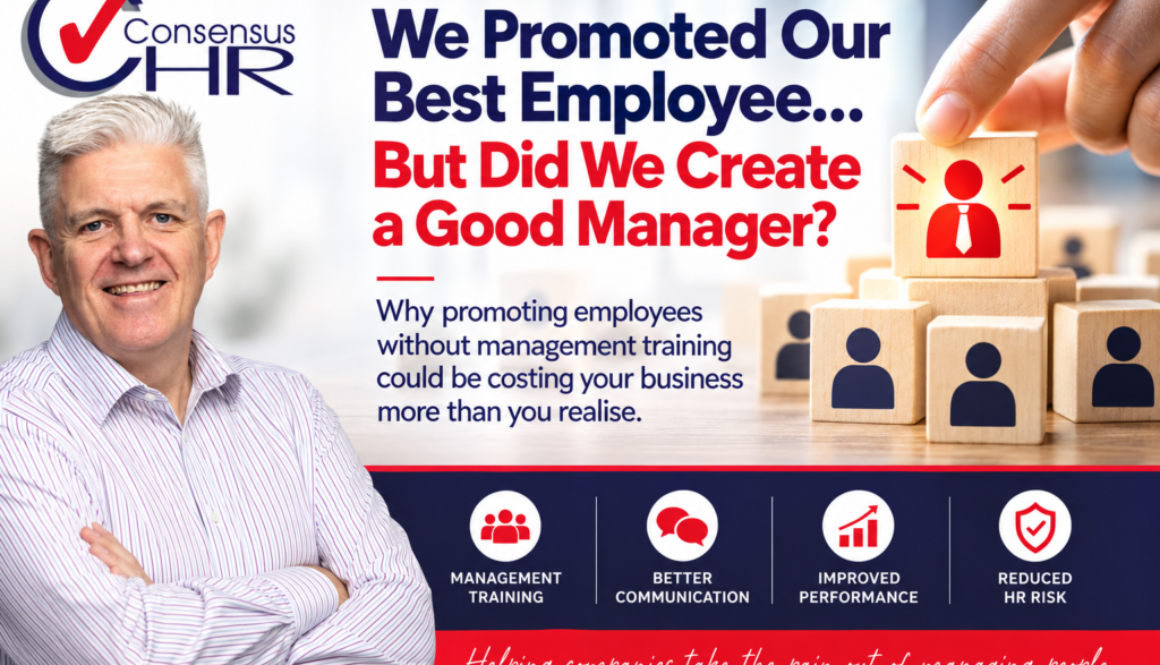
We Promoted Our Best Employee…
|
|

The most expensive HR excuse of all?
Consensus HR | Hertfordshire, Bedfordshire & Cambridgeshire
For the last three Thursdays, Consensus HR has been tackling some of the excuses businesses give for putting off good HR practice.
We finish our campaign with three areas that demonstrate exactly why our approach to HR is proactive rather than reactive.
Employers have important legal responsibilities when checking an individual’s Right to Work in the UK. The prescribed check should be carried out before employment begins if the employer wishes to establish the relevant statutory excuse against liability for a civil penalty. It must also be completed and recorded correctly.
“We’ll do it next week” could be an extraordinarily expensive sentence.
Employers have responsibilities to assess and manage workplace risks. The nature of those risks will vary according to the organisation. An office is unlikely to have the same risks as a manufacturing plant, but that does not mean there are no risks to consider.
The HSE approach to risk assessment involves identifying hazards, deciding who might be harmed and evaluating what needs to be done to control the risks.
Employment law changes. Government guidance changes. Your workforce changes. Technology changes. Working practices change. And your business changes.
Employee Handbooks and HR policies therefore need appropriate review. For Consensus HR retained clients with our relevant handbook service, keeping HR documentation under review is an important part of the support we provide.
We also encourage businesses to ensure employees can access current policies and that appropriate records are maintained when significant updates are communicated.
Waiting for an Employment Tribunal claim, grievance, discrimination allegation, serious absence issue or major employee dispute before putting appropriate HR processes in place is the definition of reactive HR.
At Consensus HR, we believe in doing the opposite.
Across our three-week campaign we have heard: “We haven’t got time.” “I’ve already told them.” “We’ll do the paperwork later.” “We’re only a small business.” “Everyone knows the rules.” “Can’t we just sack them?” “We’ll do the check later.” “We’re only an office.” “We’ll update it when we need it.” And finally: “Nothing has ever gone wrong before.”
Our response? Don’t wait for something to go wrong before finding out whether your HR is right.
Consensus HR supports SMEs across Hertfordshire, Bedfordshire and Cambridgeshire with practical HR and Employment Law support designed to prevent people problems.
Telephone: 01438 576750
Email: [email protected]
Website: www.consensushr.com
Latest HR blogs: consensushr.com/blogs-hr/

When informal HR becomes a business risk
Consensus HR | Hertfordshire, Bedfordshire & Cambridgeshire
Last Thursday, we launched our three-part campaign looking at the HR excuses that can come back to haunt employers.
This week we tackle another three: “We’re only a small business.” “Everyone knows the company rules.” And the particularly dangerous: “Can’t we just sack them?”
The size and administrative resources of an employer can be relevant in certain circumstances, but SMEs still need to manage employees fairly, consistently and lawfully.
In fact, poor HR can have a disproportionately large impact on a smaller organisation.
For an SME, prevention is generally far cheaper than cure.
Where are your policies? When were employees given them? Can they access the current Employee Handbook? When something changes, how do employees know?
Having a beautifully written Employee Handbook sitting in a manager’s drawer is of little practical value. Employees should know where relevant policies can be found and employers should keep appropriate records showing that important information has been communicated.
For businesses using HR systems such as Breathe HR, keeping current documents accessible electronically can make this considerably easier.
Depending on the circumstances, an appropriate process could involve establishing the facts, carrying out an investigation, informing the employee of the concerns, allowing them to respond, considering their explanation, following the relevant procedure, considering alternatives or mitigation and reaching a reasonable decision based on the evidence.
The Acas Code of Practice is particularly important in disciplinary and grievance situations.
Don’t decide the outcome and then try to create the process afterwards.
Next week we tackle: “We’ll do the Right to Work check later.” “It’s only an office — we don’t really need Health & Safety.” And perhaps the biggest HR excuse of all: “Nothing has ever gone wrong before.”
Consensus HR supports SMEs across Hertfordshire, Bedfordshire and Cambridgeshire with practical, proactive HR and Employment Law support.
Telephone: 01438 576750
Email: [email protected]
Website: www.consensushr.com
Latest HR blogs: consensushr.com/blogs-hr/
|

The HR excuses that come back to haunt employers
Consensus HR | Hertfordshire, Bedfordshire & Cambridgeshire
“We haven’t got time.” “They know they’re not performing.” “We’ll do the paperwork later.” Sound familiar?
Over the next three Thursdays, Consensus HR is looking at some of the most common excuses we hear when businesses have not completed essential HR processes — and, more importantly, what can happen when an apparently small shortcut turns into a much bigger people problem.
If your business has invested time and money recruiting somebody, their probationary period should be actively managed. Probation should not consist of putting a date in the diary for three or six months’ time and hoping everything goes well.
Managers should discuss performance, conduct, attendance, training, objectives and any areas requiring improvement throughout probation. If there is a problem, tell the employee, give clear examples, explain what improvement is required, offer appropriate support and set a review date.
Manage probation from day one — not on the final day.
Managers frequently tell us that they have spoken to an employee “loads of times”. We then ask: When? What was discussed? What examples were given? What improvement was required? Was a timescale agreed? Was support or training offered? When was it going to be reviewed?
Not every management conversation needs to become a formal HR process. Informal conversations are an extremely important management tool. But important conversations should be appropriately documented.
If the conversation matters, appropriately record it.
Employment documentation is not simply administration. Written records provide clarity about what has been agreed and can help prevent misunderstandings later.
This can apply to probation, performance, sickness absence, flexible working, reasonable adjustments, disciplinary and grievance matters, training and changes to employment arrangements. Records containing personal information must also be handled appropriately under applicable data-protection requirements.
Part Two: “But We’re Only a Small Business!” We tackle three more familiar excuses, including why being an SME does not mean employment law can simply be ignored — and why “everyone knows the rules” can be a dangerous assumption.
Consensus HR supports SMEs across Hertfordshire, Bedfordshire and Cambridgeshire with practical, proactive HR and Employment Law support.
Telephone: 01438 576750
Email: [email protected]
Website: www.consensushr.com
Latest HR blogs: consensushr.com/blogs-hr/

Consensus HR | Hertfordshire, Bedfordshire & Cambridgeshire
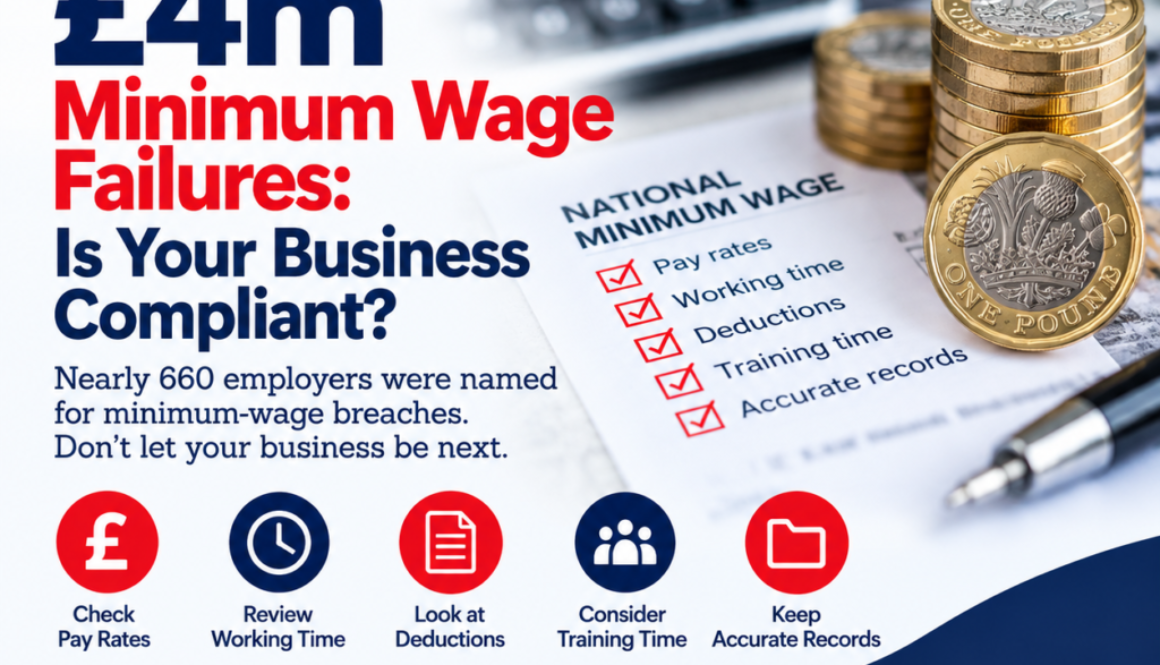
The new Fair Work Agency (FWA) has begun its inspection activity, with employers being contacted about forthcoming visits and being told what employment documentation enforcement officers may wish to inspect.
For employers, this is another reminder of why HR compliance cannot simply be dealt with when something goes wrong.
The Fair Work Agency was established on 7 April 2026 under the Employment Rights Act 2025 and is responsible for enforcing a range of employment rights. Its current responsibilities include employment agency conduct, modern slavery and gangmasters licensing, with responsibility for National Minimum Wage enforcement due to transfer fully from HMRC from April 2027.
Employers may be selected for an inspection to assess whether they are complying with legislation falling within the FWA’s remit.
Importantly, an inspection does not necessarily mean that somebody has made a complaint.
Inspections may be prearranged or unannounced.
Where an inspection is arranged in advance, employers will usually receive an email explaining what documentation the FWA wishes to inspect and the deadline for providing it.
The documents requested will depend upon the organisation and the reason for the inspection. For example, an employment agency could be asked to provide workers’ contracts, Key Information Documents and terms of business with clients.
Employers should understand that an FWA inspection can involve considerably more than somebody simply asking to see a few HR documents.
Enforcement officers may examine documents, require individuals to produce or explain records, inspect business premises and inspect computers or other equipment used to process or store relevant information.
They may also require information to be provided, issue notices of underpayment, seize documents where authorised and potentially extend an investigation to relevant labour providers or users.
This makes good record keeping increasingly important. Employment documentation should not only be legally compliant – it needs to be accurate, current, organised and accessible.
This is an area employers should take particularly seriously.
Obstructing an enforcement officer or providing false documentation may constitute a criminal offence.
Refusing to provide information, preventing access to premises, failing to comply with instructions or hindering the removal of documents may result in enforcement action, potentially including prosecution, civil penalties, criminal investigation or Labour Market Enforcement Orders.
The message for employers is straightforward: do not wait until an enforcement officer arrives before checking whether your HR records are in order.
At Consensus HR, we regularly talk about being proactive rather than reactive when managing people.
An FWA inspection is a good example of why.
Are our Contracts of Employment up to date?
Can we easily demonstrate that employees and workers have received the correct documentation?
Are our payroll and working-time records accurate and accessible?
Are National Minimum Wage requirements being correctly followed?
Are Right to Work records complete and stored correctly?
Are our HR policies and procedures current?
Do managers know what to do if an enforcement officer arrives at the business?
Could we confidently produce the information requested within a specified deadline?
If the answer to any of those questions is “I’m not sure”, now is the time to check.
It is not enough for HR documentation simply to exist somewhere on a computer.
Senior managers and those responsible for employees need to understand the organisation’s HR processes and know where relevant records are held.
Businesses should also have a clear process for dealing with an inspection. If an enforcement officer attends unexpectedly, employees and managers need to know who should be contacted internally and who is authorised to deal with the inspection.
A confused response can make an already challenging situation significantly harder.
The Fair Work Agency does not yet have the full range of enforcement responsibilities it is expected to have in the future.
That makes 2026 an important opportunity for employers to review their HR compliance before the enforcement landscape develops further.
At Consensus HR, we work with SMEs across Hertfordshire, Bedfordshire and Cambridgeshire, helping businesses ensure their employment documentation, HR policies and people-management processes are legally compliant and practically workable.
Our retained clients benefit from ongoing HR and Employment Law support, helping them remain proactive as legislation and employer responsibilities change.
If you are unsure whether your HR documentation would withstand scrutiny, we can undertake an HR review and identify areas that may need attention.
Consensus HR – Your Outsourced HR Department
Helping companies take the pain out of managing people through clear, commercial and compliant people management.
Website: www.consensushr.com
Main Office: 01438 576750
Email: [email protected]
Serving businesses throughout Hertfordshire, Bedfordshire and Cambridgeshire.
Ask Consensus HR for Support
Consensus HR | Outsourced HR Support for SMEs
Recruitment can be expensive.
But recruiting the wrong person can be considerably more expensive.
Advertising costs, management time, interviews, onboarding, training and reduced productivity can all add up.
Then there is the disruption of starting the recruitment process all over again.
So when a new employee is struggling, businesses should ask an important question:
Did we recruit the wrong person – or did we fail to give the right person the right start?
A successful recruitment process should flow directly into:
Recruitment → Offer → Contract → Induction → Objectives → Training → Probation → Review
When one of those stages is missing, problems can appear later.
A candidate may have had the right experience and performed extremely well at interview, but if nobody clearly explains what success looks like once they start, how can they confidently deliver it?
Managers often assume employees know what is expected.
That assumption can cause problems.
A new employee should understand:
ACAS describes induction – sometimes called onboarding – as the process of welcoming somebody into an organisation or role and notes that a well-structured induction helps people understand what is expected of them.
Think about the difference between these two approaches.
Business A
“Welcome aboard. There’s your desk. Sarah will show you the system. Shout if you need anything.”
Business B
Provides a planned induction, Job Description, clear responsibilities, training programme, objectives, regular manager check-ins and documented probation reviews.
Which business is more likely to know whether its recruitment decision was successful?
Businesses often tell me that somebody “just hasn’t worked out”.
My first question is usually: What process was followed?
Was there a clear Job Description?
Were expectations discussed?
Was there a proper induction?
Were SMART objectives agreed?
Did the manager hold probation reviews?
Were concerns raised when they first occurred?
Was everything documented?
If the answer to most of those questions is no, the problem may not simply be the employee.
Good recruitment needs good management afterwards.
ACAS’s latest probation guidance makes an interesting point: if an organisation regularly has employees failing probation, there may be an issue with its recruitment process.
That is why businesses should not treat recruitment, induction, probation and performance management as separate HR activities.
They are all part of the same employee journey.
Consensus HR works with SMEs across Hertfordshire, Bedfordshire and Cambridgeshire to create practical, legally informed recruitment and people-management processes.
We can support you with:
Recruit professionally. Manage proactively. Document properly.
📞 01438 576750
✉️ [email protected]
Consensus HR – Your Outsourced HR Department.
ACAS – Inductions
https://www.acas.org.uk/inductions
ACAS – Probation Periods
https://www.acas.org.uk/probation-periods
Consensus HR
https://www.consensushr.com/
For further information on any of the HR subjects we provide, please click the heading below:

Consensus HR | Hertfordshire, Bedfordshire & Cambridgeshire
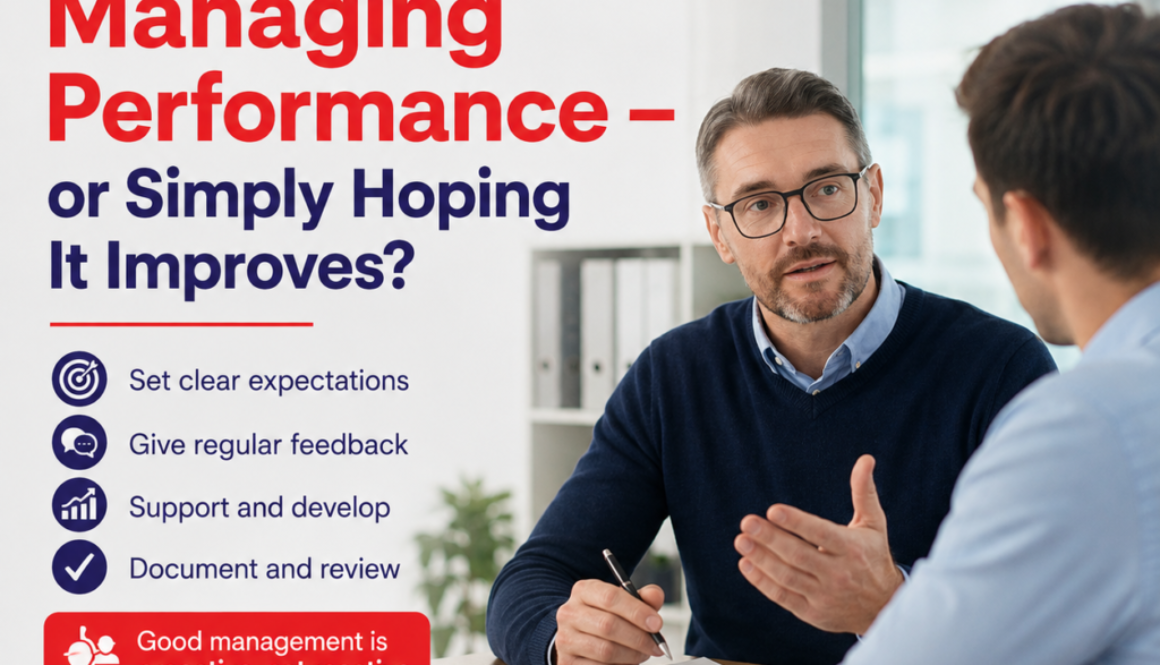
Poor performance rarely disappears by itself.
Yet one of the most common people-management problems we see at Consensus HR is managers knowing that an employee is not performing as expected, but delaying the conversation.
The employee may be missing deadlines, making repeated mistakes, failing to achieve targets or simply not performing at the level required.
Everybody seems to know there is a problem – except, sometimes, the employee.
Effective performance management is not simply about dealing with underperformance.
It should be an ongoing process involving:
ACAS recommends regular performance reviews and emphasises that managers should also discuss performance informally through feedback, coaching and regular check-ins.
The CIPD similarly describes performance management as a continuous process rather than an isolated annual event.
A yearly appraisal can have value, but it should never be the first time an employee hears that their performance is causing concern.
Imagine being told:
“Your performance hasn’t been good enough for the last six months.”
An understandable response might be:
“Why didn’t anybody tell me?”
Managers should be addressing issues when they arise.
This gives the employee an opportunity to understand the concern, explain whether anything is affecting their performance and, importantly, improve.
We regularly encourage managers to use SMART objectives:
Specific – What exactly needs to happen?
Measurable – How will achievement be demonstrated?
Achievable – Is the expectation realistic?
Relevant – Does it relate to the employee’s role and business requirements?
Time-bound – When must it be achieved?
“Improve your customer service” is vague.
“Reduce average customer response times to within 24 working hours over the next eight weeks” provides something that can actually be discussed and measured.
Throughout my HR career, I have repeatedly seen businesses promote excellent operational employees into management positions and then assume they automatically know how to manage people.
Managing people is a skill.
Managers need to know how to set objectives, give constructive feedback, hold difficult conversations, document concerns and recognise when informal management needs to become a formal HR process.
One of the biggest mistakes is allowing a performance concern to continue for months because nobody wants to have the conversation.
The conversations managers avoid are usually the conversations they later wish they had held much earlier.
Where informal support does not achieve the required improvement, a structured Performance Improvement Plan may be appropriate.
ACAS guidance recommends that a PIP identifies specific objectives, reasonable timescales and the support or training required.
Employers should also consider whether there are underlying circumstances that need addressing, including whether reasonable adjustments may be required for a disabled employee.
Performance problems should therefore be managed, supported and documented – not ignored.
Consensus HR provides practical management development designed around the situations managers actually face in the workplace.
We help managers become confident in managing:
Good management is proactive, not reactive.
📞 01438 576750
✉️ [email protected]
Consensus HR – Helping companies take the pain out of managing people.
ACAS – Performance Management
https://www.acas.org.uk/performance-management
CIPD – Performance Management
https://www.cipd.org/uk/knowledge/factsheets/performance-factsheet/
Consensus HR
https://www.consensushr.com/
For further information on any of the HR subjects we provide, please click the heading below:
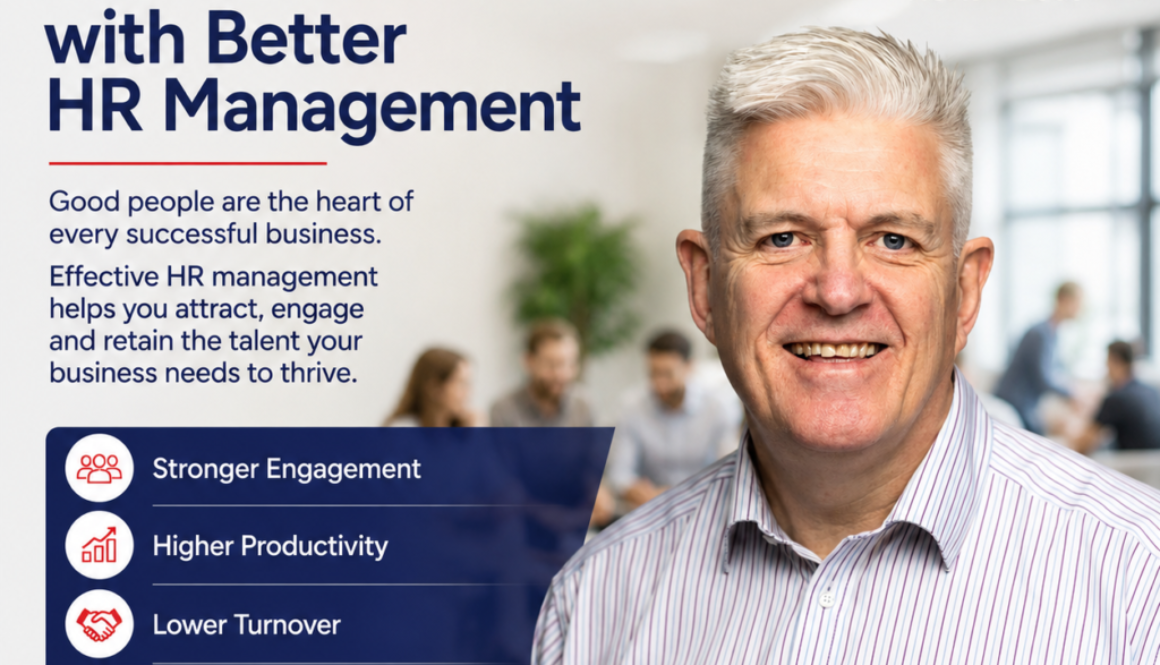
By Consensus HR – Outsourced HR Support for SMEs
Recruitment is expensive.
Advertising, interviewing, onboarding and training all require significant investment.
Yet many businesses lose excellent employees within the first year—not because they recruited the wrong person, but because they failed to support them after they joined.
Retention isn’t created through annual pay reviews.
It begins during recruitment and continues throughout onboarding, probation and ongoing management.
Successful employers provide:
Employees who understand what success looks like are far more likely to remain engaged.
Research consistently shows that people often leave managers rather than companies.
Investing in management development often produces a greater return than increasing recruitment budgets.
“Businesses often spend thousands recruiting the right person but very little ensuring they stay. Great retention comes from excellent management, regular communication and making employees feel valued from their very first day. Prevention has always been far less expensive than replacing good people.”
We work with SMEs to improve:
Helping businesses reduce recruitment costs whilst building stronger, more productive teams.
If you’d like to improve employee retention, we’d love to help.
LinkedIn: https://www.linkedin.com/company/consensus-hr
Facebook: https://www.facebook.com/ConsensusHR
X (Twitter): https://x.com/ConsensusHR
Instagram: https://www.instagram.com/consensushr
For further information on any of the HR subjects we provide, please click the heading below:
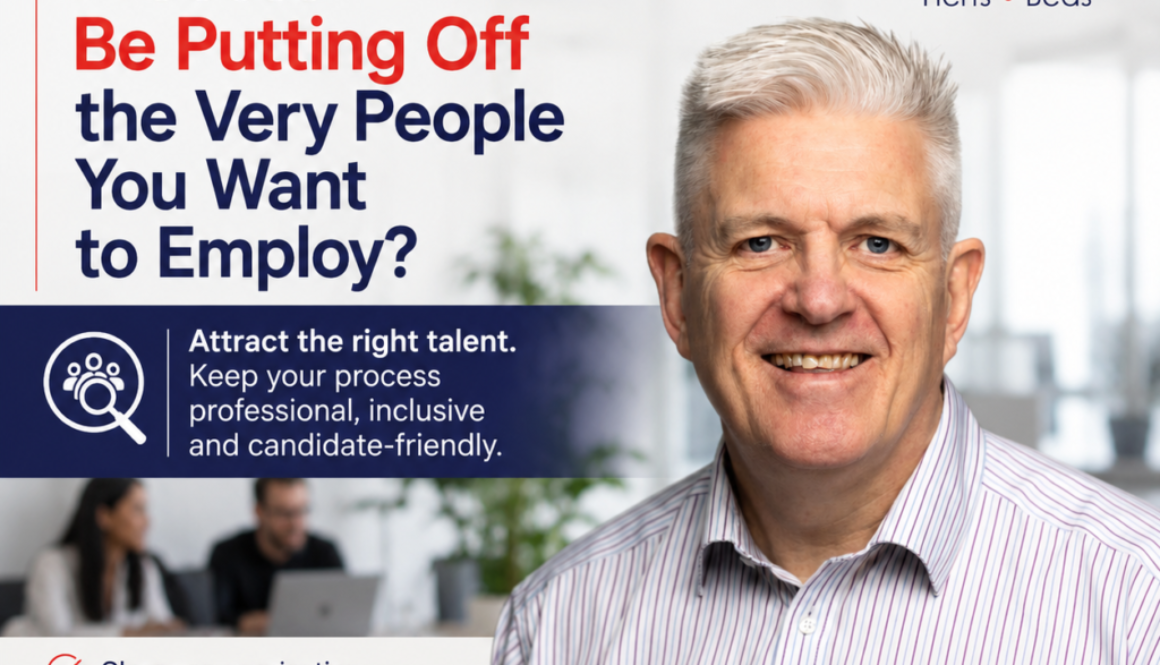
By Consensus HR – Outsourced HR Support for SMEs
Recruitment is expensive.
Advertising, interviewing, onboarding and training all require significant investment.
Yet many businesses lose excellent employees within the first year—not because they recruited the wrong person, but because they failed to support them after they joined.
Retention isn’t created through annual pay reviews.
It begins during recruitment and continues throughout onboarding, probation and ongoing management.
Successful employers provide:
Employees who understand what success looks like are far more likely to remain engaged.
Research consistently shows that people often leave managers rather than companies.
Investing in management development often produces a greater return than increasing recruitment budgets.
“Businesses often spend thousands recruiting the right person but very little ensuring they stay. Great retention comes from excellent management, regular communication and making employees feel valued from their very first day. Prevention has always been far less expensive than replacing good people.”
We work with SMEs to improve:
Helping businesses reduce recruitment costs whilst building stronger, more productive teams.
If you’d like to improve employee retention, we’d love to help.
LinkedIn: https://www.linkedin.com/company/consensus-hr
Facebook: https://www.facebook.com/ConsensusHR
X (Twitter): https://x.com/ConsensusHR
Instagram: https://www.instagram.com/consensushr
For further information on any of the HR subjects we provide, please click the heading below:
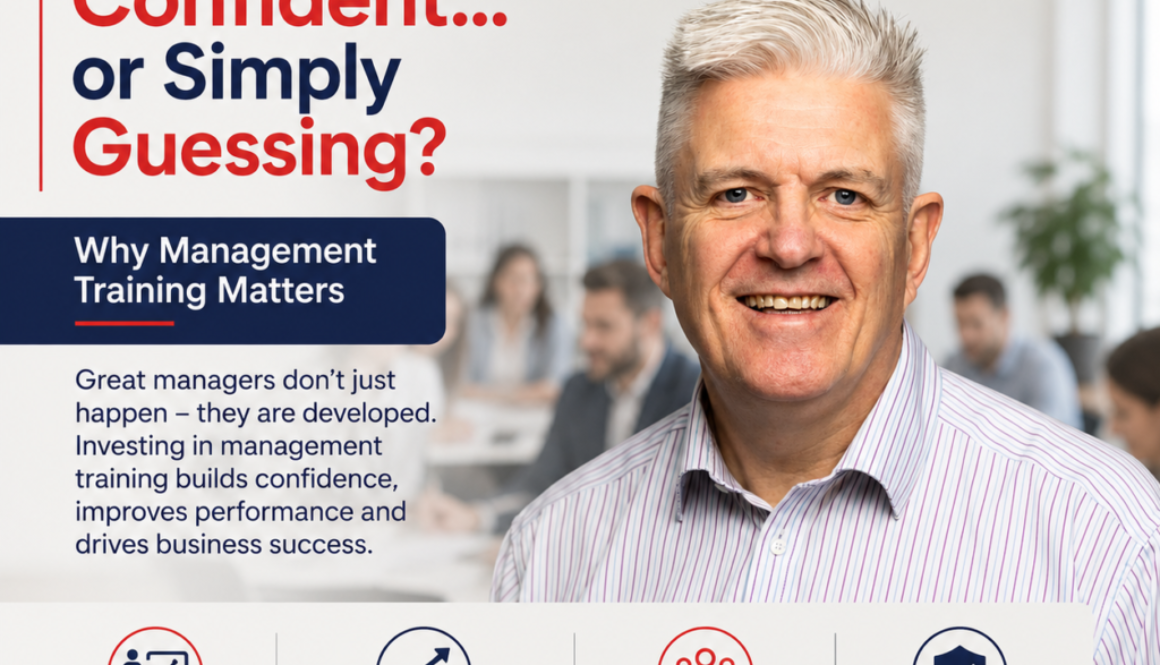
By Consensus HR – Outsourced HR Support for SMEs
Recruitment is expensive.
Advertising, interviewing, onboarding and training all require significant investment.
Yet many businesses lose excellent employees within the first year—not because they recruited the wrong person, but because they failed to support them after they joined.
Retention isn’t created through annual pay reviews.
It begins during recruitment and continues throughout onboarding, probation and ongoing management.
Successful employers provide:
Employees who understand what success looks like are far more likely to remain engaged.
Research consistently shows that people often leave managers rather than companies.
Investing in management development often produces a greater return than increasing recruitment budgets.
“Businesses often spend thousands recruiting the right person but very little ensuring they stay. Great retention comes from excellent management, regular communication and making employees feel valued from their very first day. Prevention has always been far less expensive than replacing good people.”
We work with SMEs to improve:
Helping businesses reduce recruitment costs whilst building stronger, more productive teams.
If you’d like to improve employee retention, we’d love to help.
LinkedIn: https://www.linkedin.com/company/consensus-hr
Facebook: https://www.facebook.com/ConsensusHR
X (Twitter): https://x.com/ConsensusHR
Instagram: https://www.instagram.com/consensushr
For further information on any of the HR subjects we provide, please click the heading below:
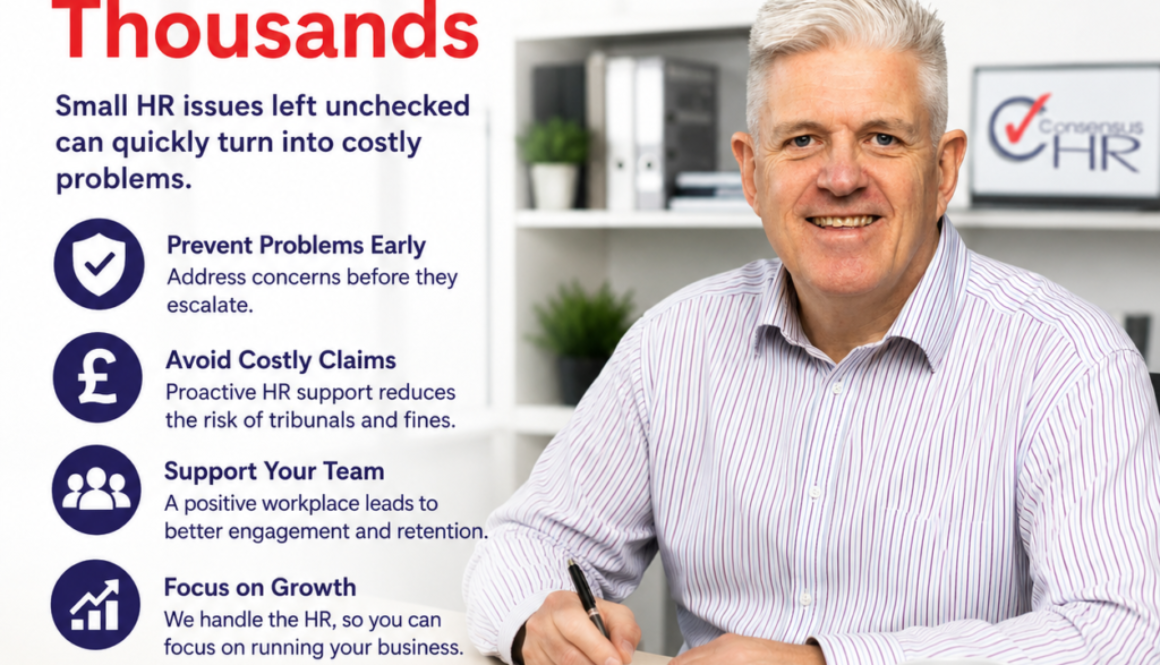
Helping companies take the pain out of managing people
By Consensus HR – Your Outsourced HR Department for Hertfordshire, Bedfordshire & Cambridgeshire
For many SMEs, HR is still viewed as something only needed when there is an issue.
An employee resigns unexpectedly.
Someone raises a grievance.
Performance drops.
Absence increases.
A disciplinary becomes unavoidable.
Or worse still…
A letter arrives notifying the business of an Employment Tribunal claim.
Only then does the search begin for professional HR advice.
Unfortunately, by that stage the problem has often been developing for months and could have been prevented.
At Consensus HR, we firmly believe that effective Human Resources is about prevention rather than cure. Just as you wouldn’t wait until your accounts were in disarray before speaking to your accountant or until your computer systems crashed before calling your IT provider, your people deserve the same proactive attention.
As your outsourced HR Department, we work alongside businesses throughout Hertfordshire, Bedfordshire and Cambridgeshire, ensuring they remain compliant with UK Employment Law while creating productive, engaged workplaces.
One of the biggest misconceptions surrounding HR is that it only becomes important when something goes wrong.
In reality, the best HR professionals spend most of their time ensuring issues never develop in the first place.
That includes:
The result?
Fewer grievances.
Fewer disciplinaries.
Lower absence.
Higher engagement.
Greater productivity.
And significantly less legal risk.
Very few Employment Tribunal claims arise because of one isolated incident.
Instead, they usually develop from a series of small management decisions that weren’t addressed at the time.
For example:
A manager delays giving feedback because they don’t want conflict.
An employee’s poor performance isn’t documented.
Probation meetings are repeatedly postponed.
Policies haven’t been updated for several years.
Managers deal with situations inconsistently.
Employees begin to feel unfairly treated.
Communication breaks down.
Eventually the employee leaves—or brings a legal claim.
All of this could often have been prevented through timely HR advice.
Many businesses avoid seeking HR advice because they see it as an unnecessary expense.
However, the real expense often comes from not asking for help.
Consider the hidden costs of poor people management:
Even one poorly handled dismissal can cost significantly more than a year’s professional HR support.
UK Employment Law never stands still.
Recent legislative developments and forthcoming reforms mean employers need to be more proactive than ever.
Businesses should regularly review:
Keeping documentation current isn’t simply best practice—it demonstrates that your business takes compliance seriously.
One of the biggest benefits our retained clients tell us they value is simply knowing someone is available to ask.
Managers regularly face situations they’ve never encountered before.
Questions such as:
“Can we extend probation?”
“How do we deal with repeated lateness?”
“Can we refuse this flexible working request?”
“Do we need an investigation?”
“Should Occupational Health be involved?”
“What documentation do we need?”
Receiving professional advice before making a decision often prevents far bigger problems later.
Unlike many HR providers, we don’t simply wait for clients to contact us after something has gone wrong.
Our retained service is built around proactive support.
We help clients by providing:
Our objective is simple:
To prevent people problems before they become expensive business problems.
“One of the biggest misconceptions I still encounter is that HR only becomes important when something has already gone wrong. The reality is quite the opposite. The businesses that experience the fewest employee issues are those that seek professional advice early. At Consensus HR we work alongside our clients every week, helping them prevent problems rather than simply resolving them after they have escalated. Prevention will always be more effective—and considerably less expensive—than cure.”
Whether you employ five people or two hundred and fifty, having experienced HR professionals available whenever you need them provides confidence, reassurance and legal protection.
Our retained clients enjoy ongoing support that helps them stay compliant, develop their managers and create productive workplaces.
Consensus HR provides outsourced Human Resources and Employment Law support for businesses throughout:
Our experienced team works as your own HR Department, delivering practical, commercial advice designed specifically for SMEs.
🌐 Consensus HR Homepage
📋 Our HR Services
https://www.consensushr.com/hr-services/
⚖️ Employment Law Support
https://www.consensushr.com/employment-law/
👥 Meet Matthew Chilcott
https://www.consensushr.com/about-us-at-consensus-hr/
📰 Latest HR Blogs
https://www.consensushr.com/blogs-hr/
📞 Book Your Complimentary HR Review
https://www.consensushr.com/free-hr-health-check/
☎️ Telephone
01438 576750
https://www.linkedin.com/company/consensushr/
https://www.facebook.com/ConsensusHR/
https://www.instagram.com/consensushr/
X
For further information on any of the HR subjects we provide, please click the heading below:

Comment from Matthew Chilcott – Owner, Consensus HR
“The arrival of the Fair Work Agency is another significant change for UK employers and reinforces something we have always encouraged our clients to do – manage HR proactively rather than waiting for a problem.
An employer may believe everything is fine because nobody has complained, but an inspection does not necessarily need to follow a complaint.
If somebody arrived at your business and asked to see your employment documentation, contracts and relevant records, how quickly could you produce them and how confident would you be that everything was legally compliant and up to date?
That is the question I would encourage every SME owner and manager to ask.
Good HR is not about producing paperwork for the sake of paperwork. It is about having clear, commercial and compliant people-management processes that you can demonstrate when required.”
Matthew Chilcott – Owner, FCIPD, ACEL, BA (Hons)