£4m Minimum Wage Failures: Is Your Business Compliant? | Consensus HR – Herts & Beds
|
|
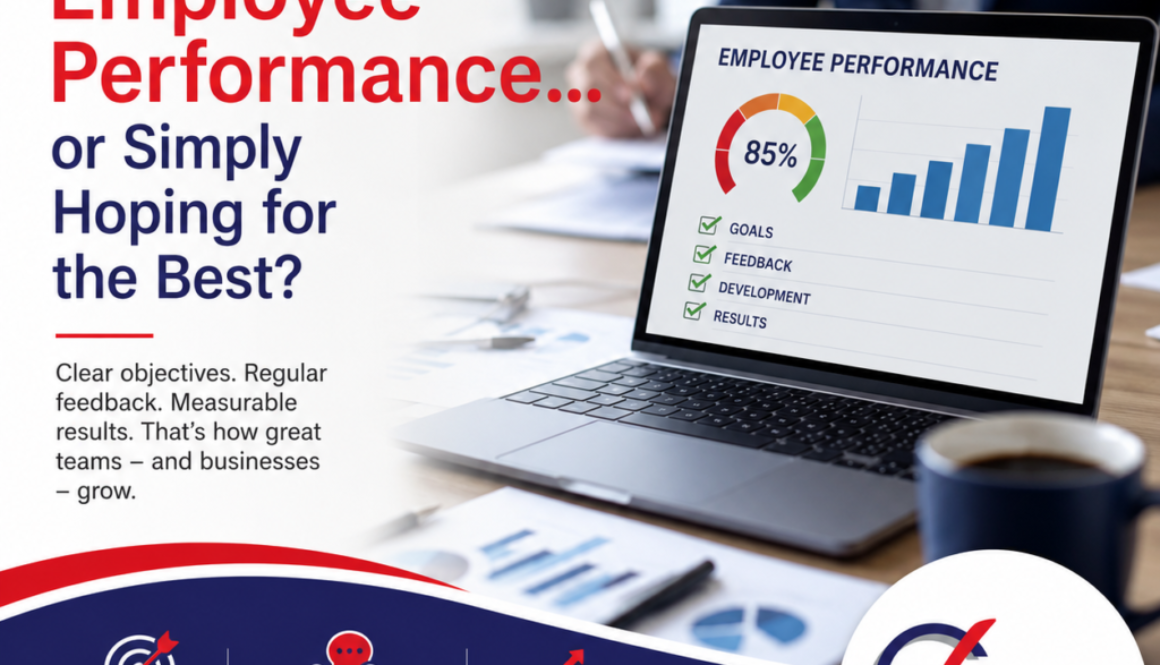
One of the most common issues we encounter when supporting businesses is poor employee performance management.
Interestingly, the problem is rarely the employee.
More often, it is the absence of clear expectations, measurable objectives and regular communication.
Without these, employees cannot be expected to consistently deliver outstanding performance.
Employees should never attend an appraisal only to discover they have been underperforming for months.
Likewise, managers should never reach the point where they feel they have “had enough” without previously discussing concerns.
Good performance management is continuous.
Regular conversations build confidence, identify development opportunities and address concerns before they become formal capability issues.
Successful organisations give employees clear direction.
Employees perform best when they know:
Without these fundamentals, motivation often declines and misunderstandings increase.
Many employees only meet with their manager formally when there is a problem.
Instead, managers should be scheduling regular one-to-one meetings throughout the year.
These discussions should focus on:
Consistent communication builds stronger relationships and creates higher-performing teams.
Performance discussions should always be recorded.
Written records:
Documentation protects both employer and employee.
“Throughout my career as a manager and HR professional, one area that has consistently challenged both managers and employees is the appraisal process. Too often, appraisals become a once-a-year exercise rather than an opportunity to genuinely develop people and improve business performance. One of the biggest reasons for this is the failure to set meaningful SMART objectives.
Whilst many organisations understand that objectives should be Specific, Measurable, Achievable, Relevant and Time-bound, I have found that the ‘M’ – Measurable – is usually the most difficult element to get right. If success cannot be measured, how can a manager or employee know whether the objective has been achieved?
In my experience, this often stems from businesses not having clearly defined performance standards. Yet many of these standards already exist. Manufacturers’ operating manuals, quality procedures, customer service standards and production targets all contain measurable benchmarks that can be incorporated into individual objectives. By using these existing standards, businesses can ensure every member of the team is working towards the same expectations whilst also identifying where additional coaching, training or support may be needed.
Effective performance management is never about catching people out. It is about giving employees clear expectations, regular feedback and the tools they need to succeed. That is why performance reviews should not simply be an annual event. They should form part of an ongoing conversation throughout the year, supported by a straightforward, user-friendly appraisal system that managers and employees both understand and feel confident using. When SMART objectives are written properly and reviewed regularly, they become one of the most powerful tools for improving individual performance, developing talent and helping businesses achieve their goals.”
Matthew Chilcott
Owner – Consensus HR
Chartered FCIPD, ACEL
Consensus HR helps businesses implement practical performance management systems, SMART objectives, appraisal processes and manager training that improve productivity whilst reducing employee relations issues.
If your managers would benefit from additional support or training, we’d be delighted to help.
For further information on any of the HR subjects we provide, please click the heading below:

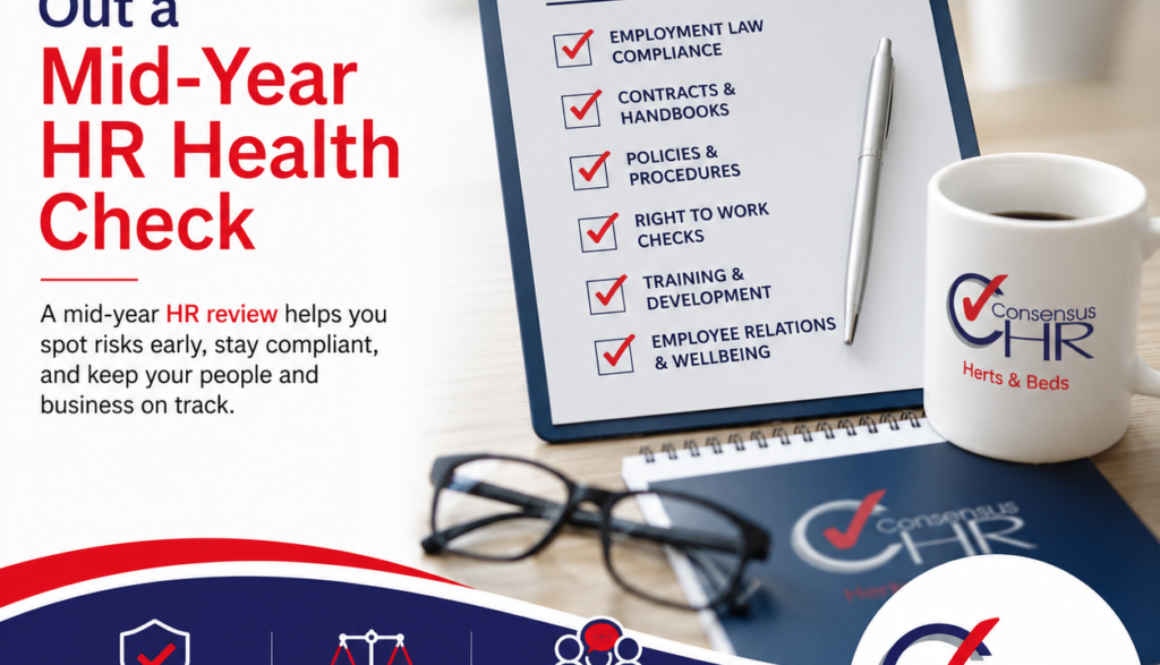
As we move into the second half of 2026, many business owners are rightly reviewing their sales performance, budgets and business plans. However, one area that is often overlooked is the effectiveness of their people management practices.
A mid-year HR Health Check is one of the most valuable exercises any organisation can undertake. Rather than waiting until an employee problem develops, taking a proactive approach allows employers to identify potential risks before they become expensive issues.
For many businesses, July provides a natural pause before the busy summer holiday period and the final push towards year-end.
It is an excellent opportunity to review:
Many employers are surprised to discover that documentation created several years ago is now significantly out of date.
One missing contract clause.
One outdated disciplinary procedure.
One manager who has never received employment law training.
One undocumented performance conversation.
Individually these may appear insignificant.
Collectively they can result in expensive Employment Tribunal claims, poor morale, higher staff turnover and management frustration.
Good HR is about prevention rather than cure.
Even where businesses have excellent policies, they are only effective if managers understand how to apply them consistently.
A HR Health Check should also include asking questions such as:
Often the answer is “sometimes.”
That inconsistency creates risk.
Employers should also use the opportunity to review upcoming legislative developments.
Preparing now allows businesses to adapt processes gradually rather than rushing when changes become law.
Forward planning always costs less than dealing with legal disputes afterwards.
Matthew Chilcott, Owner – Chartered FCIPD, ACEL, BA (Hons), Consensus HR
“Businesses regularly carry out financial health checks, equipment servicing and IT security reviews, yet many leave their HR processes untouched for years. The reality is that people are usually a company’s biggest investment and, if not managed correctly, its biggest potential risk. A simple HR Health Check can identify issues before they become expensive problems and provide employers with the reassurance that their documentation and procedures remain legally compliant and fit for purpose.
This is exactly why, as part of our retained HR service, we don’t simply provide an Employee Handbook and leave clients to manage it themselves. If a client has purchased their Employee Handbook through Consensus HR and is one of our retained monthly clients, we continually review and update their handbook whenever Employment Law or HR best practice changes.
Each update is accompanied by a practical guidance sheet that explains what has changed, why it matters and any actions managers or employees need to take. This helps businesses remain fully transparent with their teams, ensures everyone understands the latest Employment Law developments and enables organisations to implement changes quickly and consistently.
For me, good HR is about being proactive rather than reactive. By keeping documentation current and employees informed, businesses can significantly reduce risk, demonstrate compliance and create a stronger, fairer and more successful workplace. It is one of the many ways our retained HR service provides genuine value and peace of mind throughout the year.”
At Consensus HR we provide comprehensive HR Health Checks that review your current documentation, procedures and employment practices, identifying practical improvements to help protect your business and your employees.
Whether you employ five people or two hundred, we can provide clear, commercial advice tailored to your organisation.
Contact us today to arrange your complimentary HR review.
For further information on any of the HR subjects we provide, please click the heading below:
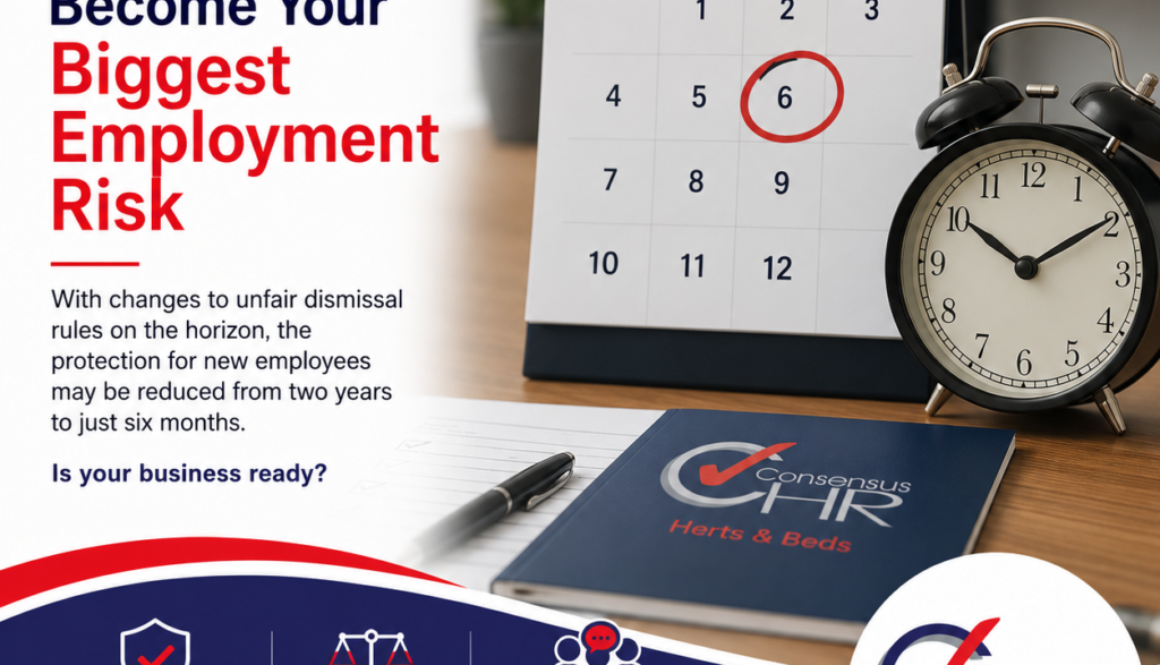
Many employers still believe that once an employee has started work, they simply “wait and see” how things develop.
Unfortunately, that approach is becoming increasingly risky.
With the Government confirming that the qualifying period for ordinary unfair dismissal is expected to reduce to six months from January 2027, the way employers recruit, induct and manage new employees needs to change now. Businesses recruiting during 2026 should already be reviewing their probationary procedures because employees reaching six months’ service when the reforms commence could fall within the new regime.
By the time concerns become serious, valuable opportunities to support improvement—or make an informed decision—have often been missed.
Good HR isn’t about dismissing people.
It’s about giving employees every opportunity to succeed whilst protecting the business should things not work out.
“One of the biggest mistakes I see employers make is leaving probation until the very end. Great employers manage probation from the first week, not the final week. Documentation and regular conversations make all the difference.”
– Matthew Chilcott, Owner, Consensus HRThroughout my HR career, working with organisations including Forte Restaurants, Welcome Break and Three Valleys Water / Veolia Water, I saw first-hand that many probationary periods failed simply because they were not actively managed.
That experience led me to develop a practical Three-Month Probationary Review Workbook, designed to guide both managers and new employees through a structured, transparent and documented probation process.
Rather than waiting until the final week to decide whether someone has been successful, the workbook schedules formal review meetings throughout the probation period, including:
End of Week One
End of Week Two
One Month
Two Months
Three Months (Final Review)
Each review sets clear objectives, records progress, identifies any training or support required and places equal responsibility on both the manager and the employee to ensure success.
By documenting discussions, agreed actions and progress throughout the first three months, businesses are able to:
Set clear expectations from day one.
Identify performance or conduct issues early.
Provide support and coaching where needed.
Demonstrate that employees have been treated fairly and consistently.
Make informed decisions at the end of probation based on documented evidence rather than opinion.
I have seen this approach prove invaluable in practice. On one occasion, the detailed records contained within the probation process enabled the employer to clearly demonstrate the genuine, non-discriminatory reasons why an employee had not successfully completed their probation. The contemporaneous documentation and structured review process formed an important part of the evidence supporting the employer’s position when allegations of race and sex discrimination were later raised.
Good probation management is not about looking for reasons to dismiss someone—it is about giving every new employee the best possible opportunity to succeed while ensuring the business has a fair, transparent and well-documented process should things not work out.
With the proposed reduction in the qualifying period for ordinary unfair dismissal rights expected from January 2027, there has never been a better time for employers to review how they manage probation periods.
At Consensus HR, we have adapted and refined this proven workbook for today’s employers. It provides managers with a simple, practical framework that helps ensure probationary reviews are completed consistently, professionally and in line with UK employment law and HR best practice.
If you would like to find out more about our Three-Month Probationary Review Workbook or how Consensus HR can help you strengthen your recruitment and onboarding process, please contact us today.
Matthew Chilcott
Owner – Consensus HR
Need help implementing a professional probation review programme?
Consensus HR has a ready-to-use Probation Review Workbook available for employers.
Contact us today for further information.
Continue reading our latest HR articles:
https://www.consensushr.com/blogs-hr/
Follow Consensus HR
The Government continues preparations for the phased implementation of the Employment Rights Act, with the reduction in the qualifying period for ordinary unfair dismissal expected from 1 January 2027. Employers are being encouraged to strengthen probation management, manager training and record keeping well in advance.
For further information on any of the HR subjects we provide, please click the heading below:

One of the most common comments I hear from employers is:
“We were surprised they resigned. We thought they were happy.”
The reality is that employees rarely make the decision to leave overnight. More often, the decision develops over weeks or months as frustrations, concerns or unmet expectations gradually build.
Many employers automatically assume that employees leave for more money. Whilst salary can play a part, it is often only one piece of a much bigger picture.
Understanding why good employees leave can help businesses improve retention, engagement and overall performance.
Research consistently shows that employees often leave organisations for reasons that extend beyond salary.
Common reasons include:
• Lack of career development
• Feeling undervalued
• Poor communication
• Lack of recognition
• Inconsistent management
• Limited training opportunities
• Poor workplace culture
• Work-life balance concerns
• Lack of support
Many of these issues can be addressed before an employee starts looking elsewhere.
When an experienced employee leaves, the impact can be significant.
Businesses may face:
✔ Recruitment costs
✔ Training and onboarding costs
✔ Loss of knowledge and experience
✔ Reduced productivity
✔ Increased workload for remaining employees
✔ Potential impact on customer service
Replacing an employee is often far more expensive than retaining one.
Many businesses focus on retention once an employee starts talking about leaving.
However, retention begins from day one.
The employee lifecycle should include:
• Effective recruitment
• Structured onboarding
• Clear expectations
• Regular feedback
• Development opportunities
• Recognition
• Strong management support
When employees feel valued and understand how they contribute to the business, they are more likely to remain engaged.
Employees want to know that their views matter.
Regular one-to-one meetings, staff surveys, team discussions and performance reviews can all help employers understand what is working well and where improvements may be needed.
The organisations that listen to their employees often identify issues before they become reasons for resignation.
“Throughout my career I have found that employees rarely wake up one morning and suddenly decide to leave. In most cases, the decision has been developing for some time. Employers who understand why people stay are often more successful than those who simply focus on why people leave. Creating an environment where employees feel valued, supported and developed remains one of the most effective retention strategies available.”
Consensus HR helps businesses improve employee engagement, management effectiveness and retention through practical HR support and proactive people management solutions.
If you would like support reviewing your employee lifecycle and retention strategy, please contact us.
📞 01438 576750
Follow Consensus HR
Facebook: https://www.facebook.com/ConsensusHR
LinkedIn: https://www.linkedin.com/company/consensus-hr
Instagram: https://www.instagram.com/consensushr
YouTube: https://www.youtube.com/@ConsensusHR
For further information on any of the HR subjects we provide, please click the heading below:
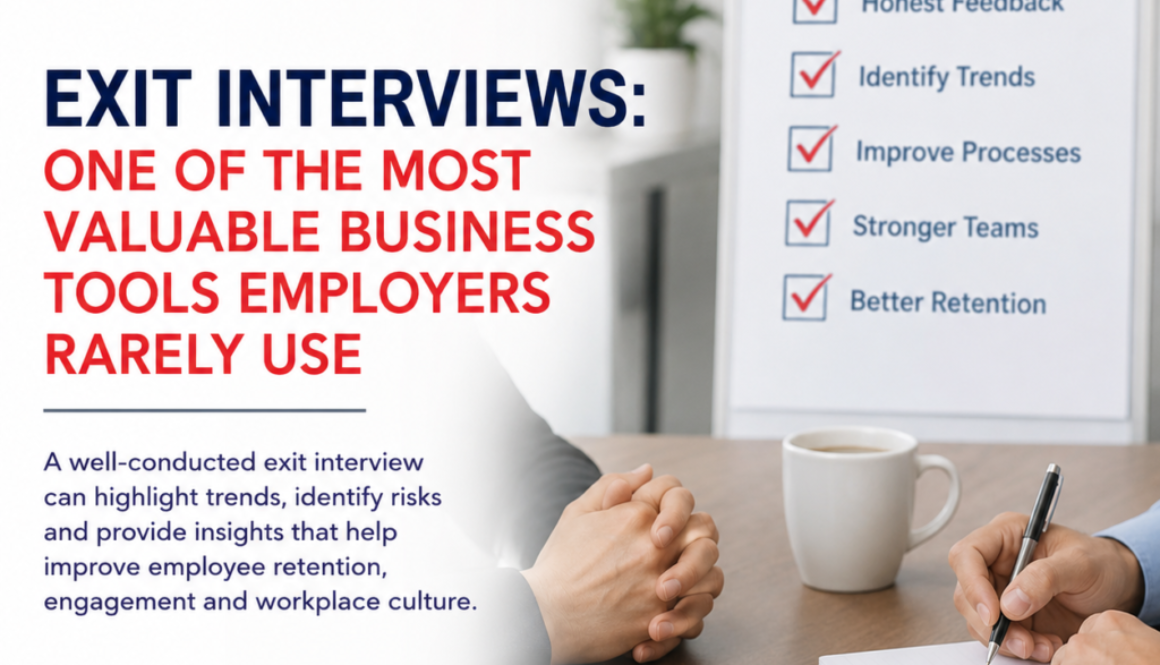
When an employee resigns, many employers focus solely on replacing them.
However, a departing employee can often provide valuable insights that help improve business performance, employee retention and workplace culture.
This is where exit interviews can become an extremely useful management tool.
Unfortunately, many organisations either fail to conduct exit interviews or treat them as a simple administrative exercise.
An exit interview is a structured discussion with an employee who has decided to leave the organisation.
The purpose is to gain honest feedback regarding their experience of working within the business.
Common topics include:
Management support
Training opportunities
Career development
Workplace culture
Communication
Employee engagement
Working conditions
Reasons for leaving
A single resignation may not reveal a problem.
However, when businesses consistently gather feedback, patterns often emerge.
Employers may identify:
High turnover in specific departments
Management issues
Training gaps
Workload concerns
Employee wellbeing challenges
Recruitment weaknesses
This information can support future business improvements.
Replacing employees can be expensive.
Recruitment costs, onboarding time, training and reduced productivity can all impact the business.
Understanding why employees leave can help employers make positive changes that improve retention and reduce unnecessary turnover.
Employees are often willing to provide constructive feedback when they know their views will be listened to professionally.
Exit interviews should never become defensive discussions.
Instead, they should focus on understanding the employee’s experience and identifying opportunities for improvement.
To maximise value, employers should:
Use a consistent process
Ask open questions
Listen without interruption
Record themes and trends
Analyse feedback regularly
Take action where appropriate
Collecting feedback is only useful if the organisation is prepared to learn from it.
Comment from Matthew Chilcott – Owner
“Many employers see an employee’s resignation as the end of the process. In reality, it can provide one of the most valuable learning opportunities available. A professionally conducted exit interview can highlight trends, identify risks and provide insights that help improve employee retention, employee engagement and workplace culture.
However, employers need to understand the true value of a constructive exit interview and avoid treating it as simply another administrative exercise. The timing of the interview, the environment in which it takes place and the way questions are asked can all significantly influence the quality of information obtained.
In many cases, exit interviews become little more than a ‘happy sheet’, with the departing employee telling their employer what they believe management wants to hear. They may state that everything was fine, that they are leaving purely for career progression or financial reasons, and that their departure has nothing to do with the business, their manager or the team they have been working with. Whilst this may genuinely be the case, employers should recognise that some employees may not feel comfortable providing honest feedback during a formal meeting immediately before they leave.
Equally, business owners and managers must be prepared to receive constructive criticism professionally. If several employees identify similar concerns regarding management practices, communication, training, workload, systems or workplace culture, this feedback should not be dismissed simply because it is uncomfortable to hear. Instead, it should be reviewed objectively and, where appropriate, investigated further.
That does not mean every comment should automatically be accepted as fact. Employers should consider the context of the feedback, look for recurring themes and carry out appropriate investigations before making changes. Occasionally, feedback may simply reflect the views of an individual who is unhappy about leaving or who wishes to air grievances on departure. However, where patterns emerge across multiple exit interviews, businesses should view this as valuable management information.
The most effective organisations use exit interviews as part of a wider employee engagement and continuous improvement strategy. They listen, analyse trends, investigate where necessary and take action when improvements can be made. Done correctly, an exit interview can provide insights that help strengthen employee retention, management effectiveness, workplace culture and overall business performance.”
Consensus HR assists businesses with employee retention strategies, employee engagement programmes, management development, workplace culture reviews and HR best practice.
Helping companies take the pain out of managing people whilst building stronger and more successful teams.
For further information on any of the HR subjects we provide, please click the heading below:

Many workplace issues begin with what employees often describe as harmless conversation.
However, what starts as informal discussion can quickly develop into rumours, misunderstandings, damaged relationships and workplace conflict.
Workplace gossip remains one of the most underestimated causes of employee relations problems.
Whilst employees naturally communicate and socialise with colleagues, there is a significant difference between positive workplace interaction and behaviour that creates division and mistrust.
A positive workplace culture relies upon trust, openness and professional communication.
When gossip becomes common, employees may begin to:
Feel excluded
Lose trust in colleagues
Question management decisions
Become distracted from their work
Experience increased stress and anxiety
Over time, workplace morale can suffer significantly.
In some cases, workplace gossip can escalate into more serious concerns such as:
Bullying
Harassment
Victimisation
Discrimination allegations
Breakdown of working relationships
Employers should not ignore repeated complaints simply because the issue initially appears minor.
Managers play a critical role in setting standards of behaviour.
Good managers:
Challenge inappropriate behaviour promptly
Promote open communication
Address concerns professionally
Lead by example
Encourage respect within teams
Employees will often mirror the behaviour they see from their leaders.
Businesses can reduce the risk of workplace gossip by:
Providing clear behavioural expectations
Training managers effectively
Encouraging employees to raise concerns directly
Promoting respectful communication
Having clear policies regarding bullying and harassment
Creating an environment where employees feel comfortable discussing concerns openly can significantly reduce rumours and speculation.
Small issues often become larger problems when they are ignored.
Addressing concerns early can help maintain positive working relationships and prevent unnecessary conflict from developing.
“Many workplace disputes I have dealt with over the years started with what employees described as ‘just office chat’. Small comments can quickly become damaging rumours, affect working relationships and create significant management challenges.
Managers and employees alike need to understand the serious implications that unnecessary workplace gossip and speculation can have on both individuals and the wider organisation. What may initially appear to be a minor issue can quickly escalate, damaging trust, reducing morale and creating divisions within teams.
If not managed appropriately, workplace gossip can negatively affect the entire culture of a business. I have seen situations where what started as a molehill rapidly became a mountain, resulting in grievances, formal investigations, sickness absence, employee resignations and significant management time being spent resolving issues that could have been prevented through early intervention and effective communication.
The risks become even greater when comments relate to personal matters or protected characteristics covered by the Equality Act 2010, such as age, disability, race, religion or belief, sex, sexual orientation, gender reassignment, marriage and civil partnership, pregnancy and maternity. In such circumstances, what some may dismiss as ‘banter’ or casual conversation can potentially lead to allegations of bullying, harassment, discrimination or victimisation.
Creating a culture of open, professional and respectful communication is therefore essential. Managers should lead by example, address inappropriate behaviour promptly and ensure employees understand the standards of conduct expected within the workplace. A positive workplace culture is built on trust, respect and professionalism, and protecting that culture should be a priority for every business.”
Consensus HR supports businesses with employee relations, workplace culture development, management training, investigations, grievance procedures and policy reviews.
Helping companies create positive and productive workplace cultures.
For further information on any of the HR subjects we provide, please click the heading below:
Communication remains one of the most important aspects of successful people management.
Whilst many employers focus on policies, procedures and systems, poor communication continues to be a major cause of workplace conflict, grievances and employee disengagement.
Employees need clarity regarding:
Their role.
Business expectations.
Performance standards.
Organisational changes.
Company objectives.
When communication is unclear, misunderstandings can quickly develop.
Businesses often experience issues when:
Managers avoid difficult conversations.
Feedback is inconsistent.
Changes are poorly communicated.
Expectations are unclear.
Employees feel they are not being listened to.
These issues can impact productivity, morale and employee retention.
Poor communication can contribute to:
Increased absence levels.
Employee turnover.
Reduced engagement.
Workplace conflict.
Formal grievances.
Customer service issues.
In many cases, problems that eventually become HR issues could have been prevented through earlier communication.
Successful organisations encourage:
Employees benefit from consistent opportunities to discuss concerns and progress.
Feedback should be timely, clear and balanced.
Managers should listen to understand rather than simply respond.
Where possible, employees should understand why decisions are being made.
Communication skills should form part of leadership development programmes.
“Throughout my HR career, I have often found that many workplace issues stem from poor communication rather than poor capability. Most employees simply want clarity, honesty, consistency, and to understand what is expected of them. Managers who communicate effectively build stronger relationships, improve performance, increase engagement, and create more positive workplace cultures.
One piece of advice I have always given to my clients, and one that I followed when managing managers and teams myself, is not to hold meetings simply for the sake of having meetings. Every meeting should have a clear purpose, a structured agenda, and defined outcomes. Employees attending should understand what is going to be discussed, why their contribution is important, and how they can add value to the conversation. Equally, if employees believe a process or communication method could be improved, they should feel comfortable raising this. However, changes should only be implemented where they genuinely improve the effectiveness of the business and its people, not simply for the sake of change.
Effective communication is also about understanding the individual. Not everyone receives information in the same way. Some employees respond best to face-to-face conversations or one-to-one meetings, whilst others prefer email, telephone discussions, team briefings, or digital communication tools. Good managers take the time to understand how their team members communicate most effectively and, where practical, adapt their approach accordingly.
That said, businesses must strike the right balance. Whilst it is important to support employees and encourage open communication, employers also have a business to run. Communication should be purposeful, timely, and focused on achieving positive outcomes for both the employee and the organisation. In my experience, organisations that get this balance right tend to have stronger employee engagement, fewer people issues, and a more productive workplace culture. As I often say, communication is not just about talking — it is about ensuring the right message is delivered, understood, and acted upon.”
Consensus HR provides support with:
Leadership development.
Line management training.
Employee engagement.
Performance management.
Difficult conversations.
Conflict resolution.
Strong communication is often the difference between a reactive business and a proactive one.
To learn more about how Consensus HR can support your organisation, visit www.consensushr.com.
For further information on any of the HR subjects we provide, please click the heading below:
Many businesses spend significant time creating an employee handbook but then fail to review it regularly.
Unfortunately, an outdated handbook can create significant risks for employers and confusion for employees.
Employment legislation, case law, and workplace expectations continue to evolve, making regular reviews essential.
An employee handbook helps explain company rules, expectations, policies, and procedures.
It provides employees with guidance on topics such as:
Attendance.
Sickness absence.
Flexible working.
Equality and diversity.
Disciplinary procedures.
Grievance procedures.
Family-friendly rights.
Health and safety.
Data protection.
A handbook also demonstrates consistency across the organisation.
Problems can arise when policies no longer reflect current law or workplace practices.
Examples include:
Flexible working changes.
Family leave rights.
Sexual harassment prevention obligations.
Data protection requirements.
Remote and hybrid working arrangements.
Failure to keep policies updated can increase the risk of disputes and Employment Tribunal claims.
An annual review allows employers to:
Ensure legal compliance.
Reflect business changes.
Improve employee understanding.
Strengthen management consistency.
Demonstrate good governance.
Regular reviews also provide an opportunity to communicate changes effectively to employees.
Even the best policies are ineffective if managers do not understand how to apply them.
Training managers on company policies is just as important as updating the documents themselves.
“One of the most common findings when we carry out HR audits or support new clients is discovering that their employee handbook has not been reviewed for several years. Employment law, case law, and HR best practice are constantly evolving, and employers need to ensure their policies remain relevant, practical, legally compliant, and reflective of how their business operates today.
Throughout my career in HR, from working with organisations such as Forte Hotels, Welcome Break and Veolia Water through to supporting hundreds of SMEs at Consensus HR, I have always believed that an employee handbook should be a living document. It should actively support managers and employees, provide clear guidance, and help prevent people problems before they arise. It should never be a document that sits on a shelf gathering dust.
This is one of the many benefits enjoyed by our retained clients at Consensus HR. Whenever there is a significant employment law change, update in best practice, or development that could affect their business, we review and update their handbook and policies accordingly. We then ensure our clients are informed of the changes and support them in communicating these updates to their teams, providing guidance and management development where required. By taking a proactive approach rather than a reactive one, businesses can reduce risk, maintain compliance, and create a positive workplace culture where both the organisation and its employees can thrive.“
How Consensus HR Can Help
Our retained clients benefit from ongoing handbook reviews and updates as legislation changes.
We can also assist with:
New employee handbooks.
Policy reviews.
Contract reviews.
HR compliance audits.
Manager training.
A regularly updated handbook remains one of the most effective tools available to employers.
For further information visit www.consensushr.com.
For further information on any of the HR subjects we provide, please click the heading below:
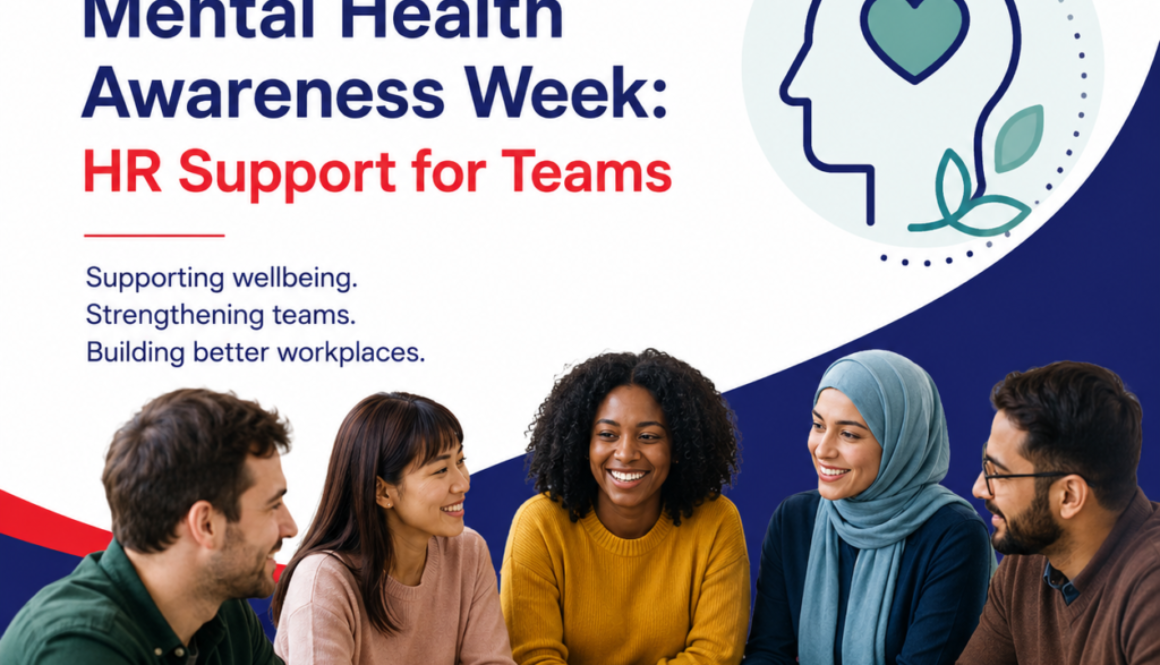
Next week marks Mental Health Awareness Week — an important reminder for employers to prioritise employee wellbeing in the workplace.
Mental health is not just a wellbeing issue — it is also a legal responsibility.
Under guidance from the Health and Safety Executive (HSE), employers must assess and manage risks relating to stress at work.
Failure to address workplace stress can lead to:
“Supporting mental health in the workplace is not just the right thing to do — it’s essential for building a productive and sustainable business. Proactive HR & business management support ensures businesses meet both their legal and moral responsibilities and create a company culture, where employees are not just a number!”
👉 Find out how we support employee wellbeing:
🌐 www.consensushr.com
Follow us:
🔗 LinkedIn: https://www.linkedin.com/company/consensus-hr/
🔗 Facebook: https://www.facebook.com/consensushr
🔗 Twitter/X: https://twitter.com/consensushr
For further information on any of the HR subjects we provide, please click the heading below:

Managing people is one of the biggest challenges for any business—and one of the highest risk areas if not handled correctly.
For many SMEs, outsourcing HR is no longer a luxury—it’s a necessity.
Outsourced HR means having a professional HR partner—like Consensus HR—acting as your:
Without the cost of employing a full-time HR team.
Businesses we support often come to us because they:
✔ Cost-effective – no full-time HR salary
✔ Expert advice – aligned to UK law and ACAS Code of Practice
✔ Proactive support – preventing issues, not just reacting
✔ Peace of mind – knowing you are compliant
Our retained clients benefit from:
👉 Explore our full services here:
https://www.consensushr.com/hr-support-services-for-your-ccompany/
The cost of getting HR wrong can be significant:
Having expert HR support in place ensures your business is protected.
“
“Outsourced HR is about giving business owners confidence, clarity, and peace of mind. At Consensus HR, we work as your trusted HR & Employment Law partner, helping to take the pressure away from managing people so our clients can focus on growing their business, while we ensure they remain compliant, protected, and operating to best practice.
Our proactive approach is centred on preventing people problems before they arise. We support businesses with all key HR foundations, including legally compliant Employee Handbooks, Contracts of Employment, and tailored Performance Review processes that drive performance and accountability across the team.
In addition, we deliver practical, business-focused management development and soft skills training, working with our clients step-by-step to design the right development programmes for their people.
With Consensus HR, you are not just receiving advice — you are gaining a fully outsourced HR function dedicated to supporting your business, your people, and your long-term success.”
For further information on any of the HR subjects we provide, please click the heading below:

With increasing focus on employee wellbeing and work-life balance, the concept of a “Right to Disconnect” is gaining traction across the UK.
While not yet a formal standalone law, the direction of travel in UK employment legislation—alongside existing obligations under the Working Time Regulations 1998 and employer duty of care—means businesses should act now to prepare.
The Right to Disconnect refers to an employee’s ability to:
Countries such as Ireland and France have already introduced formal frameworks, and the UK is expected to follow a similar path through evolving employment practices.
Failure to manage working time and employee wellbeing can lead to:
Employers already have responsibilities under UK law to:
To stay ahead and reduce risk, employers should:
✔ Introduce clear working hours policies
✔ Set expectations around email use outside working hours
✔ Train managers to respect boundaries
✔ Include guidance within your Employee Handbook
👉 Learn more about how we support businesses:
https://www.consensushr.com/hr-support-services-for-your-ccompany/
At Consensus HR, we work proactively with our retained clients to:
“We are seeing a clear shift towards protecting employee wellbeing through better management of working time. Employers who act now and put clear boundaries in place will not only reduce legal risk but also build stronger, more productive teams.”
For further information on any of the HR subjects we provide, please click the heading below:
