
HR Support
“Banter”
“Banter” instigates soar in Employment Tribunal (ET) Claims
This is an extremely interesting article written in HR Inform recently and is something at Consensus HR we have had to support clients within the past. “Banter” to one is not “Banter’ to another as failure to adequately address inappropriate actions and creating a culture which does not facilitate diversity and inclusion can proved detrimental for organisations. An article in the Mail Online, also written recently discusses further.
Banter” is too often used as an excuse to cover up unlawful attitudes and behaviours. Failure to adequately address inappropriate actions and creating a culture which does not facilitate diversity and inclusion can prove detrimental for organisations. Indeed, the number of employment tribunal cases in which workplace banter was cited rose from 67 in 2020 to 97 in 2021 – a 45% increase, highlighting the need for employers to do more to prevent situations turning nasty.
In some cases, an individual may not mean to deliberately cause harm. But, under the Equality Act 2010, unlawful harassment occurs where a person engages in unwanted conduct related to a protected characteristic, and this has the purpose or effect of –
- violating their dignity, or
- creating an intimidating, hostile, degrading, humiliating or offensive environment for them.
Banter can include jokes and comments made both in-person and virtually, and verbally or in writing, through conversations, emails, instant messaging platforms and pranks. However, what one employee sees as a joke can be extremely damaging to another. Therefore, employers should be conscious of inappropriate remarks being utilised in the workplace and ensure that the “banter” does not create an uncomfortable or offensive environment for any staff member, as this will likely instead be seen to be harassment.
Some examples of employment tribunal cases whereby respondents have unsuccessfully tried to plead that bullying or harassment was merely “workplace banter” include:
- An employee of Indian origin who was called a “cheeky monkey”, during a business-related round of golf (Basi v Snows Business Forms Ltd).
- An employee who was teased that if he didn’t like football, he “must be gay then” (Austin v Samuel Grant (Northeast) Ltd).
- An employee called “half-dead Dave” due to his age (Robson v Clarke’s Mechanicals Ltd).
- An employee who was called a “dinosaur” due to her age and sex. (A v Bonmarche Ltd).
But, if the employee engages in the “banter” or there is a workplace culture whereby comments are regularly made and accepted, a tribunal claim is less likely to be successful. This was seen when a sales rep who was taunted as being a “fat, ginger pikey” in respect of his weight and Traveller background, failed in his claim partly because the tribunal ruled that the office culture normalised banter and the claimant had engaged in similar behaviour himself. This being said, businesses should not adopt an “everyone thinks it’s a joke and takes part” attitude to normalise inappropriate behaviour. Instead, they should actively discourage banter and set clear boundaries and expectations for what is acceptable in the workplace.
Having clear policies and zero-tolerance communication on workplace bullying and harassment can help protect organisations against claims, as can regular staff training and a culture of professionalism. Organisations might need to consider establishing clear standards of practice to remove any element of improper behaviour and make clear that the workplace is an environment of respect and equality – ‘HR Inform 6-May 2022’
Mental Health Awareness Week
This year the Mental Health Awareness Week takes place from 9th May to 13th May 2022 and its theme is Loneliness.
It has been proven that it can be difficult to talk about yours, your colleagues or families personal mental health and the Mental Health Foundation and Mind have written some great articles whilst providing some very useful information which we hope you will find interesting and helpful.
Please click below to obtain further information:
Consensus HR are a plain speaking Consultancy who help businesses with the complexities and best practice in the world of Human Resources. Whether you’re a start-up, SME or bigger business we help businesses from 1 – 250 employees, to enable successful business delivery, growth and change whilst Preventing People Problems. We help you find suitable people solutions whilst providing accredited legal expert Human Resources advice.
Whatever your Human Resources business needs, we can help with our no obligation initial FREE HR audit. Book here and let’s get started!
Management Development Workshops
We continually run a a range of fact / Knowledge gaining, informal, friendly & exciting HR Management / business owner development workshops designed to equip individuals with the skills required to run their businesses successfully.
If your business would like to run a specific Workshop such as Performance Management, Disciplinary & Grievance Management, or Customer Service to name a few, please get in contact today.
Work from home for 20pc less pay!
Work from home for 20pc less pay, says top law firm Stephenson Harwood City law firm said the policy will apply to its London headquarters and most of its international offices
An recent article in The Daily Telegraph discusses a Law Firm in London who will allow its people to work from home for 20% less pay!!
As written in one of our last blogs dated the 4th April 2022, choices in relation to employees returning to the office and their place of work prior to the Pandemic are continuing to change with many businesses now offering alternatives.
In this recent case a top Law Firm is allowing its team to work from home full-time as long as they take a 20% pay cut! This is aimed at its London based and international employees and states staff must work in the office for at least 60 per cent of the year, which works out to around three days a week, or face a salary reduction.
This is a prime example of how the Pandemic is changing the way people work and where and is vital that companies ensure it is managed correctly with the flexible working policy or as shown with this company working permanently at home with a set company HR policy.
If your company is currently experiencing issues with the team since returning from the Pandemic and you now wishing them to return to the office or introduce a more flexible policy where members of the team can work from home permanently but visit the office as and when needed. Contact us today.
Sex & Part-time detriment – British Gas
A recent case, involving British Gas Trading Limited highlighted the extreme importance of ensuring that all your team are treated the same way regardless of any characteristics whether protected or not under the Equality Act 2010 such as sex and being a part-time worker was the case here.
This case concerned a female part-time employer who claimed sex and part-time worker detriment when working for such a well-known corporation.
Full details of the case can be read by clicking here.
We are always telling our clients that everybody should be treated equally regardless of any personal visible or even invisible attributes and should be managed reasonably, as any reasonable employer would as we are governed under Civil Law and the balance of probabilities.
Employers need to ensure that when implementing any Policies / Procedures that no form of any type of discrimination takes place and that the employee does not receive less favourable treatment, or it could result in costly awards which have still not be awarded in this case, but we wait to see what it is? This case also demonstrates the importance of keeping up with any systems (Policies & Procedures) as should you have to use that information to demonstrate you have followed best practice and the law and it is out of date, its use will be limited if any use at all.
Further Information: Full information provided by HR Inform, our Chartered Institute supplier discusses further:
Note for employers
There are several key takeaways from this case. Firstly, it highlights the issues which can arise when a redundancy process, and the selection criterion utilised, is unfair or unequal, even when the reasons for making a redundancy are genuine and reasonable.
In addition, the case shows the importance of treating all employees the same, regardless of their working hours and gender. Assuming an employee’s performance will struggle based on their part-time hours and family circumstances can amount to successful tribunal claims, as seen here. Therefore, employers should objectively consider output before acting against an employee. Where action is appropriate, employers should also consider what support options may help the individual to improve and provide ample opportunity for them to do so.
Finally, the case showcases the need to pay employees equally for work of equal value. In today’s competitive job market, many employers may be tempted to say the offering of a high salary to a new starter is a necessary recruitment tactic, to ensure they are able to attract candidates. However, unless this can be justified, the tribunal may continue to find the only reason for salary differentials to be sex.
SUMMARY
The employment tribunal recently found that an employee who returned to work from maternity leave on a part-time basis after having triplets was subject to sex discrimination and less favourable treatment compared to a full-time equivalent male worker.
LAW
Equality Act 2010
Section 13
(1)A person (A) discriminates against another (B) if, because of a protected characteristic, A treats B less favourably that A treats or would treat others.”
Section 11
In relation to the protected characteristic of sex—
(a) a reference to a person who has a particular protected characteristic is a reference to a man or to a woman;
(b) a reference to persons who share a protected characteristic is a reference to persons of the same sex.
The Part-time Workers (Prevention of Less Favourable Treatment) Regulations 2000
Section 5
(1) A part-time worker has the right not to be treated by his employer less favourably than the employer treats a comparable full-time worker—
(a) as regards the terms of his contract; or
(b) by being subjected to any other detriment by any act, or deliberate failure to act, of his employer.
FACTS
The claimant had worked as an intellectual property (IP) counsel since January 2012 and, when she returned from maternity leave in September 2017, was one of two IP lawyers, the other of which worked full-time. The claimant was paid £46,800 per year for working three days per week, 8am-4pm Monday-Wednesday. Her full-time colleague resigned in June 2018, leaving her to cover both roles for around 6 months before a replacement was hired. During this time, the claimant felt considerable pressure from her managers to work over and above her contractual hours, including on her non-working days.
Her performance review in 2018 contained mixed feedback, but nothing which led the employee to believe that she was performing below expectations. Despite this, she was placed on a performance improvement plan (PIP) in March 2019. At the same time, a new full-time male IP lawyer was hired on a £80,000 annual salary; his full-time equivalent wages were more than the claimant’s. British Gas were unable to show that the difference between her pay and that of the newly appointed male employee was unrelated to sex.
On 6 June 2019, she was told she was at risk of redundancy. The tribunal found the grounds for redundancy to be genuine but was dissatisfied with the selection process used. British Gas utilised a scoring matrix to decide who to make redundant. In this, the claimant scored 1 out of 7 for “focus,” which, according to the respondent’s commentary, meant she rarely demonstrates this capability and/or sometimes demonstrates the opposite.
EMPLOYMENT TRIBUNAL (ET)
The Employment Tribunal found the respondent’s expectation for the claimant to work outside of her contractual hours to be unsustainable and unreasonable. The ET also found that the claimant was placed at a disadvantage due to a discriminatory performance capping policy which saw her annual performance not being able to surpass “achieving expectations” as a result of her taking maternity leave. This low and disproportionate result was given even though her appraisal in 2017 highlighted that she was exceeding expectations. As such, it was decided that the policy operated in a discriminatory way against women.
Additionally, the employment judge decided the selection criterion utilised in the redundancy process (specifically, her “focus” score) to be irrational and concluded that the employee’s personal circumstances as a mother of young children was unconsciously being held against her. Further flaws in the redundancy process included a failure to take into consideration how a long-serving employee like the claimant (7 years) could be reasonably compared against the new, short-service employee (less than 1 year).
The employee’s claims for sex discrimination, less favourable treatment on the grounds of part-time working, unfair dismissal and equal pay were successful. Her beliefs that the company assumed she was not performing as well as a full-time male colleague and was less focussed because she was a woman with triplets working three days per week, were well-founded.
Are your Company HR Foundations Stable?
Our company mission statement is ‘Taking the pain out of managing people whilst preventing people problems’ and we are always known to say be ‘Proactive rather than reactive” in your processes / systems. We believe based on previous experiences with our clients, past and present that what goes around, comes around and it may take a long time to occur or may never occur, but it is best to have your business in a positive position where you can comfortably deal with it and prevent any unwanted financial expenditure.
Did you know that the average Employment Tribunal cost are: £8,500? (British Chamber of Commerce)
So, what does this have to do with ‘Foundations?’
When we go to see a prospective client, we always ensure that an audit of their current HR processes and documents is carried out which includes everything from their current Contracts of Employment, Policies & Procedure such as GDPR, Absence and Disciplinary & Grievance Policy and the teams last Appraisal. This helps us to then produce a detailed proposal to the client outlining what we propose they need to ensure they are working to best practice and the law. Should they take our advice what the anticipated costs would be, whether this would be Pay As You Go (PAYG) or a set twelve monthly payment/ agreement. By doing this, it allows us to see what HR foundations are currently in place and how they are being used for the benefit of the employee and businesses profit and bottom line.
So, what are the Foundations in relation to HR?
All businesses must now ensure that a new Employee has a Contract of Employment from day one of employment and a copy of the companies Disciplinary & Grievance is also suggested so as to ensure the main mandatory foundations in HR are in place for the successful management of the employee and business.
Employers should ensure when taking on their first employee and working onwards that they obtain all the fundamental foundations required for the employees HR. Personal HR areas are covered under the General Data Protection Regulations such as Name, Address, Date of Birth, sex, marital status etc but in order to ensure your company looks professional, this information should be obtained once offered employment via the application / recruitment process. This can be through the use of a comprehensive Application Form either written or electronic and correct questioning when interviewing and collecting of data and a comprehensive ‘Starter Form’ that contains all the HR & Payroll data needed.
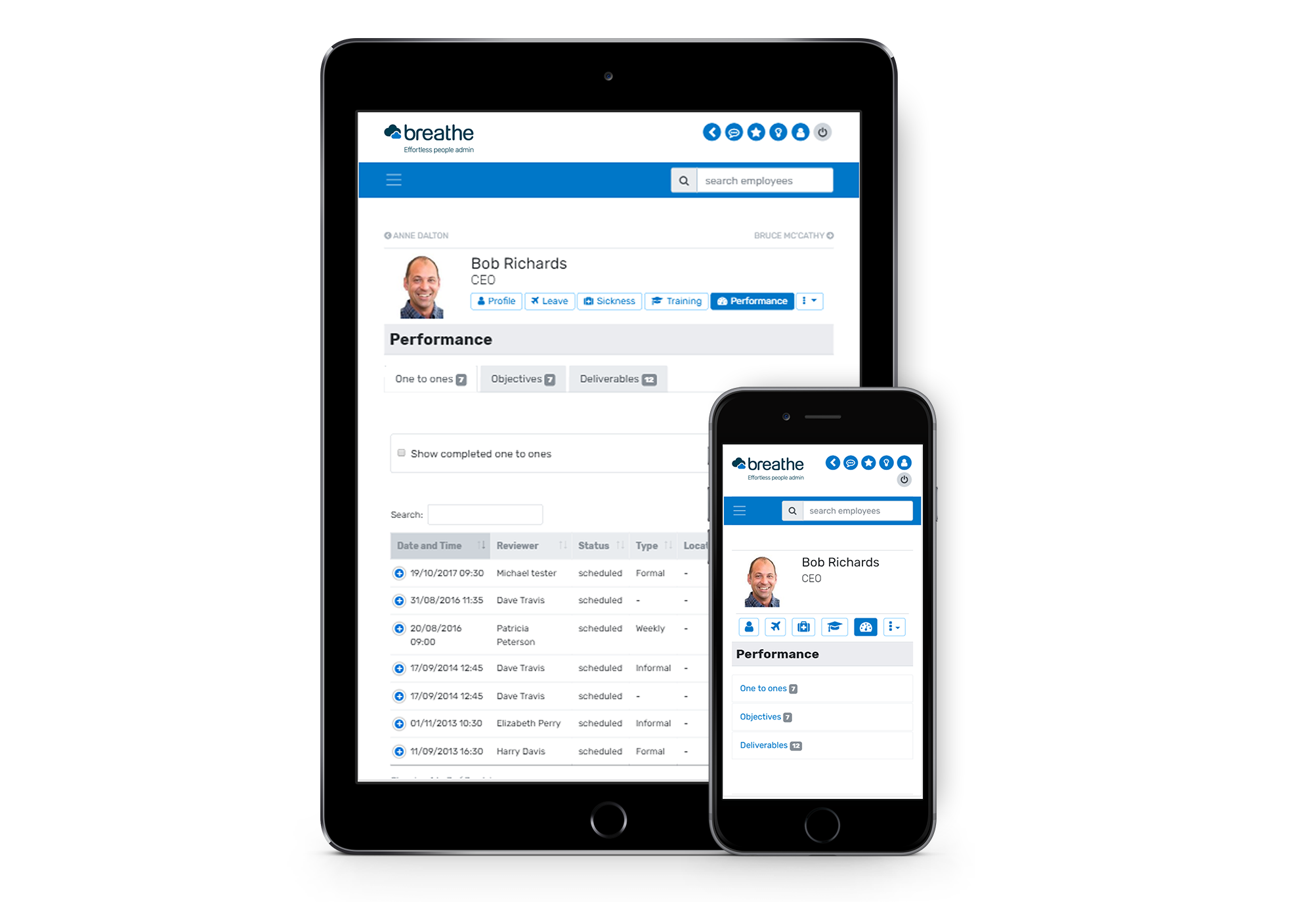
Failure to do this can result in companies wasting large amounts of time seeking the relevant information when needed and when the new employee has started and is beginning to settle into the business. Employers should obtain all this information within their first week of employment or it can result in not being able to gain the information quickly due the new employee now being in the work atmosphere. This is also why we suggest the use of an IT package such as Breathe HR (other systems are available) to collate all the information needed for HR & Payroll that allows in the year 2022 to be able to maintain an easily accessible IT system for the team to gain access to a copy of their HR documents such as Contracts of Employment and company HR Handbook whilst also requesting holidays and sending messages individually or to the team as a whole.
The Process we propose to business is:
- Identify if there is a need for the role
- Write a detailed Job Description which includes all the skills required for the role.
- Decide on salary and location role and who it report into or who reports in this role
- Arrange a set recruitment process. How are you going to interview? Where? Facilities? Who? Where will the role be advertised? Internal and External?
- Arrange an interview to take place that has a clear procedure with relevant questions based on their past experience and qualifications whilst also where they see their future.
- Obtain ALL personal / role data using a comprehensive Start Form such as those mentioned before and all emergency contacts, who should you ring if there is an emergency involving the employee, who does the role report to? What is the Salary, Days, Hours?
- Draft a Contract of Employment for the employee
- Arrange for an induction to take place on the employees first day of Employment with somebody present to check that the company has all the data needed and that a Starter Form has been completed and a signed, read and dated Contract has been received. Ensure at the Induction that you cover Company Policies & Procedures and where to find them. Health & Safety, an office / site tour, introduction to team members, location of toilets, where to eat, and take a break, fire evacuation points along with many other areas which should be detailed in a specific company induction pack full of information about the company, its products / services and Policies / Procedures. A master of this pack should be created and updated on a regular basis as and when needed and at a minimum all documents should be checked once a year to ensure they are still working to best / company practice and the law.
This induction should also include how the company ensures the team are given the skills to perform their roles such as specific development and regular performance reviews whether this is monthly, six monthly or yearly.
- Ensure all company Policies and Procedures are made easily accessible for all members of the team whether this is printed and in folders located around the business which are fully accessible areas or on an IT system that allows members of the team to access / read easily on mobile devices or an office computer.
Our six proposed initial HR Foundations:
When companies join us, we work with them to ensure the minimum drafting and implementation of the initial key HR Foundations:
- Contract of Employment
- Job Descriptions
- Performance Management (Appraisal) process
- Introduction of user-friendly employee and management HR IT system
- Audit of current HR systems and files
- Company HR Employee Handbook – set company Policies & Procedures such as Absence, Appraisals, Disciplinary and Grievance etc, Induction and welcome to the company.
Companies that ensure these HR foundations are put in place will if managed correctly mean a successful team / business that never ends up in an Employment Tribunal (ET) but can fail if all members do not ‘practice what they preach and walk the talk!!
We work with businesses of all sectors with 1 – 250 employee.
Flexi / Hybrid Working
Is this the new generation of Flexible & Hybrid Working?
The past two years since the arrival of Covid-19 has seen many changes to what people call ‘The Norm’, but what is the ‘Norm’ or the new ‘Norm’ when working?
As I write this on the 4th of April 2022, the Government last week stopped the issue of free Lateral flow tests claiming that the money can now be better spent elsewhere but what is this going to mean in the world of the average business and HR in general?
The past few weeks has seen a major change in our daily HR support to our clients with many enquiries on Hybrid & Flexible working, a subject that in the past was not a major issue with the current law and one request per annum only allowed whilst also ensuring the applicant clearly sets out what they was requesting whilst giving suggestions to the company based on their knowledge of their role how this could be accommodated.
What questions should employers be asking themselves? We have written twelve questions an employer should ask themselves when considering a Flexible / Hybrid working request.
- Do you have a detailed, best practice Flexible Working Policy?
- Has this person applied in the last year to work Flexibly, and it was managed correctly i.e., Accepted, Turnt down? (Employees can apply once every twelve months)
- Would the requested amended changes assist the employee and help to ensure they are more efficient at their work and focusing and all times whilst working?
- Have you noticed that the employees current situation is causing them problems with attendance or time keeping at work?
- Is there enough work for the employee to do during the periods they are requesting to work or could tasks be redistributed so that they do have work?
- If you accepted their request would the employee be able to finish all of their tasks with their new hours, working from home or could any of their work be redistributed to other members of the team?
- Do you need them to attend team or individual meetings outside the hours they wish to work? Can you arrange for them to attend these meetings as and when required?
- Could the employee miss out on any training or development opportunities through the new working arrangement? If so, are there any arrangements you could make to enable them to benefit from this, such as online training courses?|
- If you accepted their request to work flexibly, would the business be able to continue to meet customer demand?
- If you accepted their request, would there be any additional cost to the business i.e. if the employee was to work from home, would they need to be provided with computer hardware or software of can they use personal computers?
- If the hours are not acceptable to your business, are there any other suggestions / alternatives from the employee?
- Could an alternative arrangement be reached such as job-sharing with another employee?
NMC V Somerville – Worker Status
Employment Law - Worker Status NMC V Somerville - were they entitled to paid holiday?
HR Inform part of our Chartered Institute recently wrote another article on Worker Status and a recent case which included a judgement by the Employment Tribunal appeal on whether the worker status of the person was that of ‘Employee’ and hence entitled to paid annual leave.
This is a subject that we at Consensus HR continually have discussions with our current and prospective clients as the implications of using the incorrect status can have serious legal and expensive financial outcomes if the incorrect status used.
This article by HR Inform gives full details and notes for employers
SUMMARY
This Court of Appeal (CoA) decision involved worker status and whether or not a commitment to offer or accept a minimum amount of work was crucial to worker status for the purposes of claiming holiday pay.
LAW
Working Time Regulations 1998
Regulation 2(1) of the Regulations defines a worker in the following way:
“”Worker” means an individual who has entered into or works under (or, where the employment has ceased, worked under) –
(a) a contract of employment; or
(b) any other contract, whether express or implied and (if it is express) whether oral or in writing, whereby the individual undertakes to do or perform personally any work or services for another party to the contract whose status is not by virtue of the contract that of a client or customer of any profession or business undertaking carried on by the individual;
and any reference to a worker’s contract shall be construed accordingly.”
FACTS
The claimant acted as a panel member, and chair, of the Fitness to Practise Committee of the Nursing and Midwifery Council’s (NMC’s) regulatory body. The amount of hearings he undertook varied from between 17 to 129 in the 8 years that the claimant did this work.
In the claimants’ terms and conditions, he was described as an independent contractor and was required to adhere to a code of conduct. The NMC did not have to offer hearings (or work) and there was no obligation on the claimant to accept that which was offered. The claimant was also able to withdraw from a hearing even after one was allocated, without reason or penalty.
A claim was brought for unpaid holiday, but in order to make a ruling on this the employment tribunal (ET) had to first establish the claimant’s employment status.
EMPLOYMENT TRIBUNAL (ET)
The ET had to consider both the overarching agreement, and the individual contracts that made it up, agreed ever time an assignment was accepted. They rejected the idea that either could be contracts of employment, due to the right to withdraw services under them and therefore lack of “mutuality of obligation”.
To determine worker status, the ET identified three principles to be applied.
- The two parties must have entered a contract together.
- The work under the contract must be performed personally.
- One party cannot be a client/customer of a profession or business carried on by the claimant.
Focusing on the third, as the first two were clearly evident, the ET could not find that the NMW was a client or customer, as there was such a high degree of control, integration and subordination between the parties, including in pay negotiations, that worker status was established. The fact that there was no mutuality of obligation did not prevent this finding.
EMPLOYMENT APPEAL TRIBUNAL (EAT)
The NMC appealed on the basis of mutuality of obligation, but this was dismissed because it was not a prerequisite for worker status to have an irreducible minimum of obligation to accept and perform a minimum amount of work for the other party who was obliged to offer or pay for that work.
The NMC again appealed, again on this point.
COURT OF APPEAL (COA)
The ET’s three principles of worker status were confirmed. It was held by the CoA that the overarching contract between the claimant and the NMC included mutually enforceable obligations, but these were not necessarily the type that meant there was a worker contract, nor did it amount to a contract to do or perform services personally, it simply laid out the obligations that would be in place if a separate agreement to do or perform services personally was made.
However, when an assignment was offered and accepted, an individual worker agreement did arise, as the performance was personal, and the NMC was neither a customer nor a client. It did not matter that there was no future obligation to offer or accept work, nor that the claimant could withdraw from the agreement if they so chose.
Notes for employers
This case appears to settle the debate as to whether or not “mutuality of obligation” crucial to worker status where the individual is performing ad hoc work; it is not. Neither is the right to cancel or withdraw the work a barrier to this status.
As such, we are left with the following key questions to be asked when considering is someone is a self-employed independent contractor and not a worker.
- Is the organisation a client or a customer of theirs? If not, worker status is likely. Consider:
- Are they integrated into the business?
- Is the organisation in control and the individual subordinate?
- Can pay be negotiated or rates set by the individual and not the organisation?
- What level of financial risk is there for the individual?
If the answer to these is yes, worker status is likely.
- Are they personally required to do the work? Is the right of substitution genuine? Genuine substitution is likely to indicate self-employed status.
The History of Human Resource Management (HRM)
The History of Human Resource Management (HRM) begins around the end of the 19th century, when welfare officers (sometimes called ‘welfare secretaries’) came into being. They were women and involved with the protection of women and girls. Their creation was a reaction to the:
- Harshness of industrial conditions
- Pressures arising from the extension of the franchise
- Influence of trade unions and the labour movement
- Campaigning of enlightened employers, often Quakers, for what was called ‘industrial betterment’
As the role grew there was some tension between the aim of moral protection of women and children and the need for higher output.
20th century developments
The First World War accelerated change in the development of personnel management. Women were recruited in large numbers to fill the gaps left by men going to fight. This meant reaching agreement with trade unions (often after bitter disputes) about ‘dilution’– accepting unskilled women into craftsmen’s jobs and changing manning levels.
During the 1920s, jobs with the titles of ‘Labour Manager’ or ‘Employment Manager’ were introduced to the engineering industry and other industries where there were large factories. The role involved handling absence, recruitment, dismissal and queries over bonuses. Employers’ federations, particularly in engineering and shipbuilding, negotiated national pay rates with the unions, but there were local and district variations and there was plenty of scope for disputes.
During the 1930s, the economy was beginning to pick up. Big corporations in these newer sectors saw value in improving employee benefits as a way of recruiting, retaining and motivating employees. But older industries such as textiles, mining and shipbuilding were hit by the worldwide recession. These sectors did not adopt new techniques, seeing no need to do so because they had no difficulty in recruiting labour.
The Second World War brought about welfare and personnel work on a full-time basis at all establishments producing war materials. The Ministry of Labour and National Service insisted on it, just as the Government had insisted on welfare workers in munitions factories in the previous conflict. The Government saw specialist personnel management as part of the drive for greater efficiency. As a result, the number of people in the personnel function grew substantially; there were around 5,300 in 1943.
Reaping the rewards of HR
By 1945, employment management and welfare work had become integrated under the broad term ‘personnel management’. Experience of the war had shown that output and productivity could be influenced by employment policies. The role of the personnel function in wartime had been largely that of implementing the rules demanded by large-scale, state-governed production. As a result, the image of an emerging profession was very much a bureaucratic one.
Following the development of poor industrial relations during the 1960s, a Royal Commission under Lord Donovan was set up. Reporting in 1968, it was critical of both employers and unions; personnel managers were criticised for lacking negotiation skills and failing to plan industrial relations strategies. At least in part, Donovan suggested, these deficiencies were a consequence of management’s failure to give personnel management sufficiently high priority.
In the 1960s and 1970s employment started to develop significantly. At the same time personnel techniques developed using theories from the social sciences about motivation and organisational behaviour. Selection testing became more widely used and management training expanded. During the 1970s, specialisms started to develop with reward and resourcing, for example, being addressed as separate issues.
Around the mid-80s, the term ‘Human Resource Management’ arrived from the USA. The term ‘Human Resources’ is an interesting one; it seemed to suggest that employees were an asset or resource-like machines, but at the same time HR also appeared to emphasise employee commitment and motivation. At Consensus HR, we always emphasise to clients the importance of making the most of one of your most important business assets and resources: your people.
Today's HR Activities
In today’s HR world we ensure that we cover a number of specialist disciplines, including:
- Diversity (plus other aspects of employment law)
- Reward (including compensation, benefits, pensions)
- Resourcing (such as recruitment, disciplinary and redundancy processes)
- Employee relations (including performance and absence management)
- Organisation development and design
- Learning and development
- Correcting systems, policies & procedures
These disciplines ensure that your business is working to best practice, within the law and making maximum use of its team. This offers financial and operational benefits to the business and team.
Join the HR revolution!