For the last three Thursdays, Consensus HR has been tackling some of the excuses businesses give for putting off good HR practice.
We finish our campaign with three areas that demonstrate exactly why our approach to HR is proactive rather than reactive.
Excuse 7: “We’ll Do the Right to Work Check Later”
Our answer: Don’t.
Employers have important legal responsibilities when checking an individual’s Right to Work in the UK. The prescribed check should be carried out before employment begins if the employer wishes to establish the relevant statutory excuse against liability for a civil penalty. It must also be completed and recorded correctly.
What could happen if you don’t? Current Government guidance provides for civil penalties of up to £60,000 per illegal worker in relevant circumstances. More serious consequences can arise in cases involving knowingly employing an illegal worker or having reasonable cause to believe somebody does not have the right to work.
“We’ll do it next week” could be an extraordinarily expensive sentence.
Excuse 8: “We’re Only an Office — Nothing Dangerous Happens Here”
Our answer: Health and safety is not just for factories, warehouses and construction sites.
Employers have responsibilities to assess and manage workplace risks. The nature of those risks will vary according to the organisation. An office is unlikely to have the same risks as a manufacturing plant, but that does not mean there are no risks to consider.
The HSE approach to risk assessment involves identifying hazards, deciding who might be harmed and evaluating what needs to be done to control the risks.
What could happen if you don’t? The question often comes after an incident: “Why wasn’t this risk identified?” That is not when an employer wants to start thinking about risk assessment.
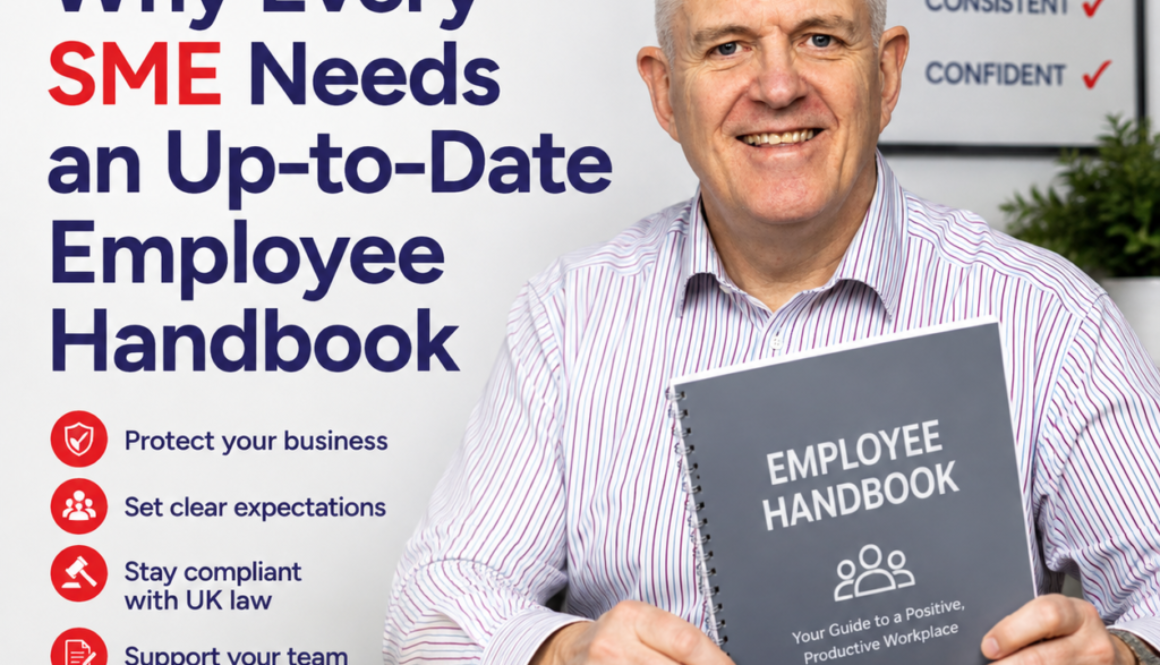
Excuse 9: “We’ll Update the Employee Handbook When We Need To”
Our answer: The time to discover your policies are out of date is not when you are trying to use them.
Employment law changes. Government guidance changes. Your workforce changes. Technology changes. Working practices change. And your business changes.
Employee Handbooks and HR policies therefore need appropriate review. For Consensus HR retained clients with our relevant handbook service, keeping HR documentation under review is an important part of the support we provide.
We also encourage businesses to ensure employees can access current policies and that appropriate records are maintained when significant updates are communicated.
And finally… “Nothing Has Ever Gone Wrong Before”
Our answer: That doesn’t mean nothing will.
Businesses insure their premises before a fire. They back up computer systems before losing data. They manage cash flow before the bank account is empty. HR should be approached in exactly the same way.
Waiting for an Employment Tribunal claim, grievance, discrimination allegation, serious absence issue or major employee dispute before putting appropriate HR processes in place is the definition of reactive HR.
At Consensus HR, we believe in doing the opposite.
Comment from Matthew Chilcott — Owner, Consensus HR
“Throughout this three-week campaign, there has been one common theme behind every excuse — ‘we’ll deal with it when we need to’. My experience throughout my HR career has taught me that this is exactly the wrong way around.
The best HR work often happens quietly in the background: contracts are correct, policies are current, managers know what to do, probation reviews happen, conversations are documented and advice is taken before decisions are made.
You may never know exactly which problem that work prevented — and that is the point. At Consensus HR, we want our clients spending their time running and growing their businesses, not firefighting people problems that could have been prevented.”
Matthew Chilcott — Owner, FCIPD, ACEL, BA (Hons)
From excuses to action
Across our three-week campaign we have heard: “We haven’t got time.” “I’ve already told them.” “We’ll do the paperwork later.” “We’re only a small business.” “Everyone knows the rules.” “Can’t we just sack them?” “We’ll do the check later.” “We’re only an office.” “We’ll update it when we need it.” And finally: “Nothing has ever gone wrong before.”
Our response? Don’t wait for something to go wrong before finding out whether your HR is right.
Book a complimentary HR review
Consensus HR supports SMEs across Hertfordshire, Bedfordshire and Cambridgeshire with practical HR and Employment Law support designed to prevent people problems.
Last Thursday, we launched our three-part campaign looking at the HR excuses that can come back to haunt employers.
This week we tackle another three: “We’re only a small business.” “Everyone knows the company rules.” And the particularly dangerous: “Can’t we just sack them?”
Small businesses need practical HR — not unnecessary bureaucracy. But practical does not mean ignoring employment law or abandoning fair processes.
Excuse 4: “We’re Only a Small Business — Surely All This Doesn’t Apply to Us?”
Our answer: Being small is not a general exemption from employment law.
The size and administrative resources of an employer can be relevant in certain circumstances, but SMEs still need to manage employees fairly, consistently and lawfully.
In fact, poor HR can have a disproportionately large impact on a smaller organisation.
What could happen if you don’t? One difficult employee situation can consume hours of senior management time. Instead of focusing on customers, sales, operations, cash flow and growth, managers can become absorbed by grievances, investigations, disciplinary meetings, correspondence, sickness issues and potentially legal proceedings.
For an SME, prevention is generally far cheaper than cure.
Excuse 5: “Everyone Knows the Company Rules”
Our answer: Can you demonstrate that?
Where are your policies? When were employees given them? Can they access the current Employee Handbook? When something changes, how do employees know?
Having a beautifully written Employee Handbook sitting in a manager’s drawer is of little practical value. Employees should know where relevant policies can be found and employers should keep appropriate records showing that important information has been communicated.
For businesses using HR systems such as Breathe HR, keeping current documents accessible electronically can make this considerably easier.
What could happen if you don’t? Imagine trying to discipline an employee for breaching a company rule. The employee says, “I’ve never seen that policy.” The manager says, “Everyone knows it.” HR asks, “When was it given to them?” Silence.
Excuse 6: “Can’t We Just Sack Them?”
Our answer: Sometimes there may ultimately be a fair reason for dismissal — but process matters.
Depending on the circumstances, an appropriate process could involve establishing the facts, carrying out an investigation, informing the employee of the concerns, allowing them to respond, considering their explanation, following the relevant procedure, considering alternatives or mitigation and reaching a reasonable decision based on the evidence.
The Acas Code of Practice is particularly important in disciplinary and grievance situations.
What could happen if you don’t? An employer can begin with a genuine management concern and weaken its position through a flawed process. Where the Acas Code applies, an Employment Tribunal can adjust compensation by up to 25% for an unreasonable failure to comply with it.
Don’t decide the outcome and then try to create the process afterwards.
Comment from Matthew Chilcott — Owner, Consensus HR
“SME owners regularly tell me they don’t want HR to become corporate or bureaucratic — and I agree with them. Good HR for an SME should be practical and proportionate.
But there is an enormous difference between keeping a process straightforward and not following a process at all. When somebody says, ‘Can’t we just sack them?’, my job is to understand what has happened, identify the risks and help the business take the appropriate next steps.
Sometimes slowing a manager down and getting the process right can prevent months of unnecessary problems afterwards. Good HR doesn’t stop managers managing. It helps managers manage properly.”
Matthew Chilcott — Owner, FCIPD, ACEL, BA (Hons)
Next Thursday — the final part
Next week we tackle: “We’ll do the Right to Work check later.” “It’s only an office — we don’t really need Health & Safety.” And perhaps the biggest HR excuse of all: “Nothing has ever gone wrong before.”
Need practical HR support?
Consensus HR supports SMEs across Hertfordshire, Bedfordshire and Cambridgeshire with practical, proactive HR and Employment Law support.
Recruiting the wrong person and then failing to manage their probation properly can be considerably more expensive.
One of the most common situations we see when supporting businesses is an employee approaching the end of their probationary period and the manager suddenly asking: “What are we going to do about their probation?”
Our response is often another question: “What have you been doing throughout their probation?”
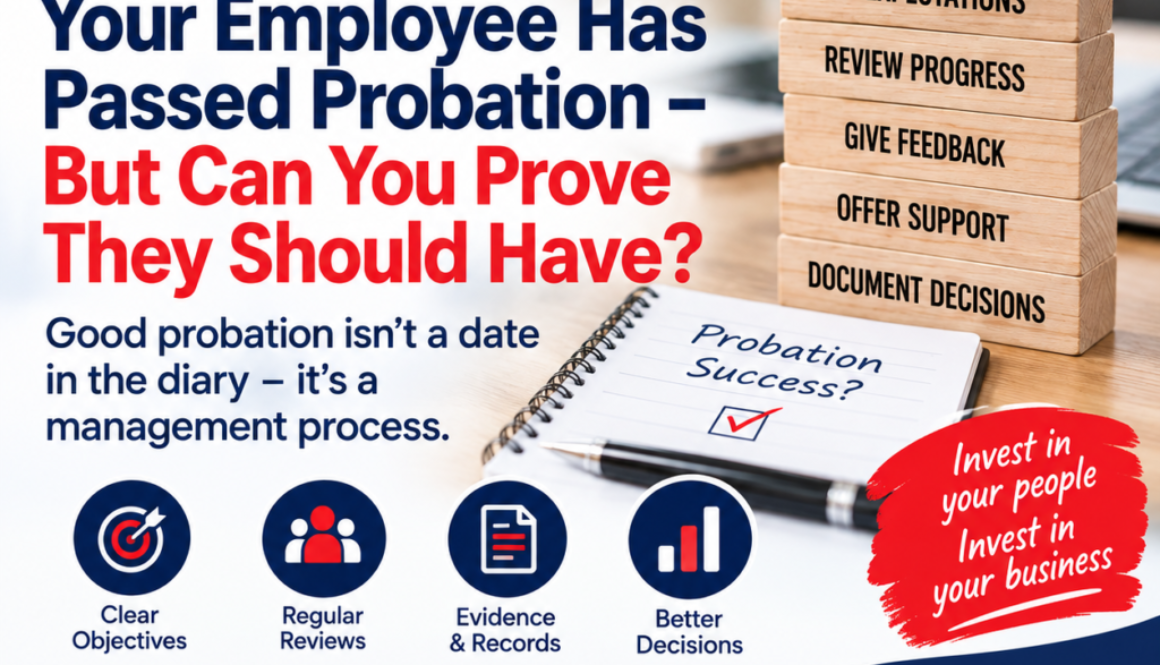
Because a probationary period should never simply be a date entered into the calendar when somebody joins the company. It should be an active management process from Day One.
Why probation management is becoming even more important
From 1 January 2027, the qualifying period for ordinary unfair dismissal protection will reduce from the current two years to six months. The Government has specifically advised employers using contractual probation periods to consider how those arrangements will operate alongside the new six-month qualifying period. Government guidance.
ACAS also emphasises that probation gives employers an opportunity to assess performance, skills and suitability while giving the employee the opportunity to decide whether the role and organisation are right for them. ACAS guidance.
Probation is not a date in the diary – it is a management process.
“But they’re still on probation…”
Being on probation does not mean an employee has no employment rights. Employees can have important rights from the beginning of employment, including protection against discrimination and certain automatically unfair reasons for dismissal.
This is why managers should never assume: “They’re in probation, so we can just get rid of them.” There should still be a genuine business reason for the decision and an appropriate process.
What should actually happen during probation?
A well-managed probationary period should start when the employee joins the organisation – not a few days before the probation expiry date.
Expectations are clear from the beginning. The employee should understand their role, responsibilities, standards and objectives.
SMART objectives are agreed. What does successful performance actually look like, and how will it be measured?
Regular probation meetings take place. Don’t wait until the final week. Review progress throughout the probation period.
Concerns are raised when they happen. If something is not right in week four, discuss it in week four – not month six.
Support and training are provided. Employees should have a reasonable opportunity to understand and achieve the required standards.
Everything is documented. Keep notes of meetings, objectives, concerns, support and agreed actions.
A clear decision is made before probation expires. Confirm whether the employee has passed, whether an extension is appropriate where contractually permitted, or whether employment should end following an appropriate process.
ACAS guidance says that where probation is extended, the employer should tell the employee in writing before the original probation expires and agree matters such as the extension period, review points, improvement expectations, training and final review. Read more from ACAS.
The dangerous “automatic pass”
Imagine this situation. An employee has a six-month probationary period. Month one – a few concerns. Month two – the manager says performance needs to improve. Month three – another informal conversation. Month four – nothing documented. Month five – the manager is busy. Month six – the probation expiry date passes.
Two weeks later the manager contacts HR: “They’ve never really been performing. Can we extend their probation?”
That is exactly the kind of situation businesses should be avoiding. Good HR is about dealing with people issues proactively rather than reactively.
Comment from Matthew Chilcott – Owner, Consensus HR
“One of the biggest mistakes I continue to see is businesses putting a probation end date in the diary and then doing very little until that date arrives.
Throughout my career, I have always believed that probation should be an active management process. A new employee should know what is expected of them, how their performance will be measured and whether they are achieving the required standard.
If there is a problem in month one, talk about it in month one. Don’t wait until the end of probation and suddenly produce a list of concerns the employee has never previously heard.
With unfair dismissal protection changing from January 2027, getting recruitment, induction and probation right is going to become even more important.”
Matthew Chilcott – Owner, Chartered FCIPD, ACEL, BA (Hons)
Is your probation process ready for 2027?
Now is the time for employers to review:
Contracts of Employment
Probation clauses
Induction processes
Probation documentation
Manager training
SMART objectives
Performance records
At Consensus HR, we also provide our structured Probationary Period Workbook, designed to help businesses and managers properly manage and document the first months of employment.
Because the best time to discover that somebody is not right for your business is during a properly managed probation process – not months afterwards.
Need HR support?
Consensus HR provides outsourced HR & Employment Law support to businesses throughout Hertfordshire, Bedfordshire and Cambridgeshire.
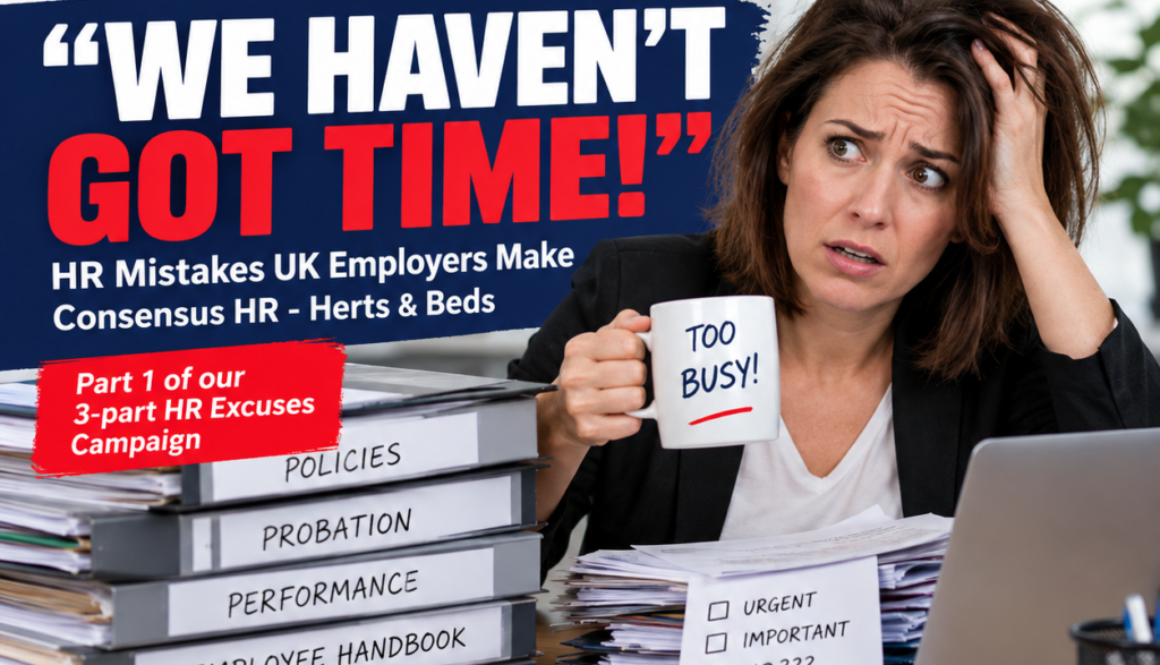
“We haven’t got time.” “They know they’re not performing.” “We’ll do the paperwork later.” Sound familiar?
Over the next three Thursdays, Consensus HR is looking at some of the most common excuses we hear when businesses have not completed essential HR processes — and, more importantly, what can happen when an apparently small shortcut turns into a much bigger people problem.
Good HR is not about producing paperwork for the sake of it. It is about making sure employees know what is expected, managers know how to manage and the business can demonstrate what it has done if a situation later becomes disputed.
Excuse 1: “We Haven’t Got Time to Complete the Probation Review”
Our answer: Make time.
If your business has invested time and money recruiting somebody, their probationary period should be actively managed. Probation should not consist of putting a date in the diary for three or six months’ time and hoping everything goes well.
Managers should discuss performance, conduct, attendance, training, objectives and any areas requiring improvement throughout probation. If there is a problem, tell the employee, give clear examples, explain what improvement is required, offer appropriate support and set a review date.
What could happen if you don’t? Problems may continue until the end of probation, leaving the employee able to say: “Nobody ever told me there was a problem.” Employers should also remain mindful of contractual obligations and legal risks including discrimination and automatically unfair dismissal protections.
Manage probation from day one — not on the final day.
Excuse 2: “They Know They’re Not Performing — I’ve Told Them Loads of Times”
Our answer: What does your documentation show?
Managers frequently tell us that they have spoken to an employee “loads of times”. We then ask: When? What was discussed? What examples were given? What improvement was required? Was a timescale agreed? Was support or training offered? When was it going to be reviewed?
Not every management conversation needs to become a formal HR process. Informal conversations are an extremely important management tool. But important conversations should be appropriately documented.
What could happen if you don’t? Months later, the employee may remember events differently. Instead of clear evidence of repeated discussions, the position can become “I definitely told them” versus “No, you didn’t.” A simple contemporaneous note or follow-up email can make the position considerably clearer.
If the conversation matters, appropriately record it.
Excuse 3: “We’ll Sort the Paperwork Out Later”
Our answer: Later has an unfortunate habit of becoming never.
Employment documentation is not simply administration. Written records provide clarity about what has been agreed and can help prevent misunderstandings later.
This can apply to probation, performance, sickness absence, flexible working, reasonable adjustments, disciplinary and grievance matters, training and changes to employment arrangements. Records containing personal information must also be handled appropriately under applicable data-protection requirements.
What could happen if you don’t? Managers leave. Employees leave. Memories fade. Circumstances change. Six months later somebody asks, “What did we actually agree?” — and nobody can prove the answer.
Comment from Matthew Chilcott — Owner, Consensus HR
“One of the biggest mistakes I see businesses make is believing that dealing with HR properly takes too much time. In reality, the conversations managers avoid and the paperwork they don’t complete are often exactly the things that take considerably more management time when a problem develops later.
Probation is a perfect example. Don’t recruit somebody, leave them largely unmanaged for three or six months and then suddenly decide at the end that they are not suitable. Manage from day one. Talk regularly. Set clear expectations. Document the important points and deal with concerns when they arise.
Twenty minutes spent managing something properly today could save hours, days or even weeks further down the line.”
Matthew Chilcott — Owner, FCIPD, ACEL, BA (Hons)
Next Thursday…
Part Two: “But We’re Only a Small Business!” We tackle three more familiar excuses, including why being an SME does not mean employment law can simply be ignored — and why “everyone knows the rules” can be a dangerous assumption.
Need practical HR support?
Consensus HR supports SMEs across Hertfordshire, Bedfordshire and Cambridgeshire with practical, proactive HR and Employment Law support.
The new Fair Work Agency (FWA) has begun its inspection activity, with employers being contacted about forthcoming visits and being told what employment documentation enforcement officers may wish to inspect.
For employers, this is another reminder of why HR compliance cannot simply be dealt with when something goes wrong.
The Fair Work Agency was established on 7 April 2026 under the Employment Rights Act 2025 and is responsible for enforcing a range of employment rights. Its current responsibilities include employment agency conduct, modern slavery and gangmasters licensing, with responsibility for National Minimum Wage enforcement due to transfer fully from HMRC from April 2027.
Inspections Can Be Announced – or Unannounced
Employers may be selected for an inspection to assess whether they are complying with legislation falling within the FWA’s remit.
Importantly, an inspection does not necessarily mean that somebody has made a complaint.
Inspections may be prearranged or unannounced.
Where an inspection is arranged in advance, employers will usually receive an email explaining what documentation the FWA wishes to inspect and the deadline for providing it.
The documents requested will depend upon the organisation and the reason for the inspection. For example, an employment agency could be asked to provide workers’ contracts, Key Information Documents and terms of business with clients.
What Can Fair Work Agency Enforcement Officers Do?
Employers should understand that an FWA inspection can involve considerably more than somebody simply asking to see a few HR documents.
Enforcement officers may examine documents, require individuals to produce or explain records, inspect business premises and inspect computers or other equipment used to process or store relevant information.
They may also require information to be provided, issue notices of underpayment, seize documents where authorised and potentially extend an investigation to relevant labour providers or users.
This makes good record keeping increasingly important. Employment documentation should not only be legally compliant – it needs to be accurate, current, organised and accessible.
What Happens If a Business Does Not Cooperate?
This is an area employers should take particularly seriously.
Obstructing an enforcement officer or providing false documentation may constitute a criminal offence.
Refusing to provide information, preventing access to premises, failing to comply with instructions or hindering the removal of documents may result in enforcement action, potentially including prosecution, civil penalties, criminal investigation or Labour Market Enforcement Orders.
The message for employers is straightforward: do not wait until an enforcement officer arrives before checking whether your HR records are in order.
Would Your HR Records Stand Up to Inspection?
At Consensus HR, we regularly talk about being proactive rather than reactive when managing people.
An FWA inspection is a good example of why.
Are our Contracts of Employment up to date?
Can we easily demonstrate that employees and workers have received the correct documentation?
Are our payroll and working-time records accurate and accessible?
Are National Minimum Wage requirements being correctly followed?
Are Right to Work records complete and stored correctly?
Are our HR policies and procedures current?
Do managers know what to do if an enforcement officer arrives at the business?
Could we confidently produce the information requested within a specified deadline?
If the answer to any of those questions is “I’m not sure”, now is the time to check.
The Importance of Management Awareness
It is not enough for HR documentation simply to exist somewhere on a computer.
Senior managers and those responsible for employees need to understand the organisation’s HR processes and know where relevant records are held.
Businesses should also have a clear process for dealing with an inspection. If an enforcement officer attends unexpectedly, employees and managers need to know who should be contacted internally and who is authorised to deal with the inspection.
A confused response can make an already challenging situation significantly harder.
Comment from Matthew Chilcott – Owner, Consensus HR
“The arrival of the Fair Work Agency is another significant change for UK employers and reinforces something we have always encouraged our clients to do – manage HR proactively rather than waiting for a problem.
An employer may believe everything is fine because nobody has complained, but an inspection does not necessarily need to follow a complaint.
If somebody arrived at your business and asked to see your employment documentation, contracts and relevant records, how quickly could you produce them and how confident would you be that everything was legally compliant and up to date?
That is the question I would encourage every SME owner and manager to ask.
Good HR is not about producing paperwork for the sake of paperwork. It is about having clear, commercial and compliant people-management processes that you can demonstrate when required.”
Matthew Chilcott – Owner, FCIPD, ACEL, BA (Hons)
Preparing Your Business Now
The Fair Work Agency does not yet have the full range of enforcement responsibilities it is expected to have in the future.
That makes 2026 an important opportunity for employers to review their HR compliance before the enforcement landscape develops further.
At Consensus HR, we work with SMEs across Hertfordshire, Bedfordshire and Cambridgeshire, helping businesses ensure their employment documentation, HR policies and people-management processes are legally compliant and practically workable.
Our retained clients benefit from ongoing HR and Employment Law support, helping them remain proactive as legislation and employer responsibilities change.
If you are unsure whether your HR documentation would withstand scrutiny, we can undertake an HR review and identify areas that may need attention.
Need HR & Employment Law Support?
Consensus HR – Your Outsourced HR Department
Helping companies take the pain out of managing people through clear, commercial and compliant people management.
When one of those stages is missing, problems can appear later.
A candidate may have had the right experience and performed extremely well at interview, but if nobody clearly explains what success looks like once they start, how can they confidently deliver it?
What Does Good Look Like?
Managers often assume employees know what is expected.
That assumption can cause problems.
A new employee should understand:
Their key responsibilities
Performance standards
Who they report to
Their objectives
Required behaviours
Company policies and procedures
Training requirements
How performance will be measured
When probation reviews will take place
Where to go when they need help
ACAS describes induction – sometimes called onboarding – as the process of welcoming somebody into an organisation or role and notes that a well-structured induction helps people understand what is expected of them.
The First Few Weeks Matter
Think about the difference between these two approaches.
Business A
“Welcome aboard. There’s your desk. Sarah will show you the system. Shout if you need anything.”
Business B
Provides a planned induction, Job Description, clear responsibilities, training programme, objectives, regular manager check-ins and documented probation reviews.
Which business is more likely to know whether its recruitment decision was successful?
Comment from Matthew Chilcott – Owner, Consensus HR
Businesses often tell me that somebody “just hasn’t worked out”.
My first question is usually: What process was followed?
Was there a clear Job Description?
Were expectations discussed?
Was there a proper induction?
Were SMART objectives agreed?
Did the manager hold probation reviews?
Were concerns raised when they first occurred?
Was everything documented?
If the answer to most of those questions is no, the problem may not simply be the employee.
Good recruitment needs good management afterwards.
Recruitment and Performance Are Connected
ACAS’s latest probation guidance makes an interesting point: if an organisation regularly has employees failing probation, there may be an issue with its recruitment process.
That is why businesses should not treat recruitment, induction, probation and performance management as separate HR activities.
They are all part of the same employee journey.
Is Your Recruitment Process Protecting Your Business?
Consensus HR works with SMEs across Hertfordshire, Bedfordshire and Cambridgeshire to create practical, legally informed recruitment and people-management processes.
Recruiting the Right Person Is Only Half the Job – Keeping Them Is the Real Challenge
By Consensus HR – Outsourced HR Support for SMEs
Recruitment is expensive.
Advertising, interviewing, onboarding and training all require significant investment.
Yet many businesses lose excellent employees within the first year—not because they recruited the wrong person, but because they failed to support them after they joined.
Successful retention starts on day one
Retention isn’t created through annual pay reviews.
It begins during recruitment and continues throughout onboarding, probation and ongoing management.
Successful employers provide:
Structured inductions
Regular feedback
Clear expectations
SMART objectives
Training opportunities
Open communication
Recognition
Employees who understand what success looks like are far more likely to remain engaged.
Managers make the biggest difference
Research consistently shows that people often leave managers rather than companies.
Investing in management development often produces a greater return than increasing recruitment budgets.
Comment from Matthew Chilcott – Owner, Consensus HR
“Businesses often spend thousands recruiting the right person but very little ensuring they stay. Great retention comes from excellent management, regular communication and making employees feel valued from their very first day. Prevention has always been far less expensive than replacing good people.”
How Consensus HR helps
We work with SMEs to improve:
Recruitment
Contracts of Employment
Onboarding
Probation programmes
Employee Handbooks
Performance management
Management training
Employee engagement
Retention strategies
Helping businesses reduce recruitment costs whilst building stronger, more productive teams.
If you’d like to improve employee retention, we’d love to help.
Why Your Employee Handbook Should Be One of Your Most Used Business Documents
By Consensus HR – Helping Businesses Take the Pain out of Managing People
Too often we hear the same comment:
“Our handbook is over 100 pages long… nobody reads it.”
Our response is always the same.
If nobody reads it…
…why have one?
An Employee Handbook should never sit on a shelf collecting dust.
It should be a practical guide that managers use every week and employees can easily access whenever they need information.
A handbook should support your business every day
A professionally written handbook helps businesses:
Set expectations
Create consistency
Demonstrate fairness
Protect against legal claims
Build trust
Improve communication
The most successful businesses don’t just issue a handbook during induction.
They actively use it.
Is yours up to date?
Employment Law continues to evolve.
Policies surrounding family leave, flexible working, harassment, disciplinary procedures and many other employment matters require regular review.
An outdated handbook can create unnecessary risk.
Comment from Matthew Chilcott – Owner, Consensus HR
“One of the biggest mistakes I see is businesses assuming their handbook only needs updating every few years. Employment Law changes continuously and your documentation should evolve alongside it. At Consensus HR, retained clients who have purchased their Employee Handbook through us receive updated versions whenever legislation changes, together with training notes to help managers and employees understand what has changed. Your handbook should become your company’s HR bible.”
Why retained clients benefit
Clients retaining our monthly HR service who have purchased their handbook through us receive:
Regular legal updates
Updated handbook sections
Guidance notes
Support implementing changes
Manager advice
Employee communication support
Helping ensure everyone understands not only what has changed—but why.
By Consensus HR – Your Outsourced HR Department for Hertfordshire, Bedfordshire & Cambridgeshire
One of the most common comments we hear from business owners is:
“We didn’t think it was a big issue at the time.”
Unfortunately, by the time many employers seek professional HR advice, what began as a relatively minor concern has often developed into a formal grievance, disciplinary matter, long-term sickness absence or even an Employment Tribunal claim.
In reality, very few employee relations problems appear overnight.
Most start with small warning signs that are overlooked, ignored or simply allowed to continue.
At Consensus HR, we believe the best HR is proactive rather than reactive. Addressing concerns early not only protects your business but also creates a happier, more productive workplace where employees know what is expected of them.
Small Problems Rarely Stay Small
Managers often delay addressing issues because they hope they will resolve themselves.
Unfortunately, they rarely do.
Examples include:
Persistent lateness.
Minor conduct issues.
Falling performance.
Poor communication.
Personality clashes within teams.
Low morale.
Increasing sickness absence.
Customer complaints.
Failure to follow company procedures.
Each incident may appear insignificant on its own, but together they often indicate a much bigger issue developing beneath the surface.
Why Managers Avoid Difficult Conversations
Managing people isn’t always easy.
Many managers avoid difficult conversations because they worry about:
upsetting the employee,
saying the wrong thing,
damaging relationships,
creating conflict,
or simply not knowing how to approach the discussion.
The result is usually the same.
The issue continues, other employees notice the inconsistency, standards begin to slip and the problem becomes far more difficult to resolve.
Constructive conversations held early are almost always easier than formal disciplinary meetings later.
Documentation Is Your Best Friend
One of the biggest mistakes employers make is relying on memory.
Without written records, it becomes difficult to demonstrate:
what expectations were communicated,
what support was provided,
what meetings took place,
what improvements were agreed,
and whether employees were treated consistently.
Good documentation protects both employer and employee.
It creates transparency, encourages accountability and provides valuable evidence should formal action ever become necessary.
Prevention Costs Less Than Resolution
Business owners regularly insure their premises, maintain equipment and invest in cyber security because they understand the importance of prevention.
HR should be viewed in exactly the same way.
Investing in:
management training,
clear policies,
effective communication,
regular one-to-one meetings,
employee handbooks,
structured performance reviews,
and professional HR advice,
can prevent expensive disputes before they arise.
Employment Law Update
Employment law continues to evolve, and employers should ensure their people management practices evolve alongside it.
With the anticipated January 2027 reduction in the qualifying period for unfair dismissal protection to six months, managers will have less time to identify concerns, provide support and make informed employment decisions.
This makes early intervention, regular review meetings and robust documentation more important than ever before.
Businesses that wait until problems become serious may find they have left it too late.
Comment from Matthew Chilcott – Owner, Consensus HR
“One lesson I’ve learnt throughout my HR career is that managers rarely regret having a professional conversation early—but they often regret waiting too long. Most Employment Tribunal cases don’t begin with a major incident; they develop because smaller issues weren’t managed consistently. The most successful employers create a culture where regular conversations, clear expectations and good documentation are simply part of everyday management. That’s exactly the proactive approach we encourage all our clients to adopt.”
How Consensus HR Can Help
At Consensus HR, we become your outsourced HR department, helping businesses prevent employee issues before they become costly disputes.
Our retained HR support includes:
Unlimited HR and Employment Law advice.
Employee relations support.
Disciplinary and grievance guidance.
Employee Handbook reviews and updates.
Management training.
Performance management systems.
Recruitment and onboarding support.
HR documentation.
Employment Law updates.
HR Health Checks.
Our goal is simple: helping employers manage people confidently, legally and commercially.
For over 20 years, Consensus HR has been helping SMEs across Hertfordshire, Bedfordshire and Cambridgeshire take the pain out of managing people. Whether you need retained HR support, contracts of employment, employee handbooks, management training or guidance on Employment Law, our experienced team provides practical, commercial advice that helps businesses remain compliant while getting the very best from their people.
Consensus HR – Helping employers stay proactive, compliant and focused on growing their business.
Your Outsourced Human Resources (HR) Department.
For further information on any of the HR subjects we provide, please click the heading below:
Nobody enjoys telling someone that their performance has slipped, attendance has become unacceptable or behaviour needs to improve.
However, delaying those conversations often creates far bigger problems.
Problems rarely solve themselves
Small issues quickly become larger ones.
Poor attendance becomes habitual.
Performance declines further.
Other employees begin asking why poor behaviour appears acceptable.
Eventually the manager has an issue involving several members of the team rather than just one.
Employees appreciate clarity
Many employees actually want to know where they stand.
Constructive feedback delivered professionally provides people with the opportunity to improve.
Without feedback they often assume everything is acceptable.
Then, when formal action suddenly begins months later, they are understandably surprised.
Documentation matters
Every informal discussion should be documented.
Not because you’re expecting legal action.
Because memories fade.
Managers change.
Employees move departments.
Having clear notes helps everyone understand what support has already been offered.
Prevention remains cheaper than cure
Early intervention frequently prevents:
Formal disciplinary action
Capability procedures
Grievances
Workplace conflict
Long-term absence
Employee resignations
Good managers don’t avoid conversations.
They have them professionally and promptly.
Matthew Chilcott’s Comment
“Throughout my career, whether managing teams in hospitality, retail, local government, manufacturing, utilities or now supporting hundreds of SMEs through Consensus HR, I have found that the conversations managers avoid are usually the conversations they later wish they had held much earlier. Too often, managers hope that issues around performance, attendance, behaviour or attitude will simply improve on their own. Unfortunately, they rarely do. Small issues have a habit of becoming much larger ones if they are not addressed promptly, often impacting team morale, productivity and ultimately the customer experience.
One of the biggest reasons managers avoid these conversations is a lack of confidence. Many have been promoted because they excelled technically in their role, but have never received the training needed to manage people effectively. They worry about upsetting someone, saying the wrong thing or creating conflict, so they postpone the discussion. In reality, delaying the conversation often makes it more difficult for everyone involved and can eventually result in formal disciplinary procedures, grievances, capability processes or even the loss of a valued employee.
In my experience, the most successful managers are those who build regular communication into their everyday management style. They hold frequent one-to-one meetings, provide constructive feedback, set clear and measurable SMART objectives, recognise good performance and deal with concerns as soon as they arise. Employees generally appreciate honesty, clarity and consistency, particularly when conversations are handled professionally, respectfully and with genuine support.
Professional, supportive communication is not about criticising people; it is about helping them succeed. When expectations are clear, support is available and issues are addressed early, formal HR procedures often become unnecessary. Documentation should support these conversations, providing an accurate record of the guidance and assistance offered, rather than being seen as something that only becomes important when things have gone wrong.
Good people management is proactive rather than reactive. The earlier managers have the right conversation, the easier it usually is to achieve a positive outcome. That is why I always encourage businesses to invest in developing their managers with the confidence, skills and practical tools to deal with issues while they are still small. Those early conversations are often the difference between retaining an engaged employee and facing an avoidable and expensive people problem later.”
Matthew Chilcott Owner – Consensus HR
Need help managing difficult conversations?
Consensus HR can support managers through coaching, documentation and practical HR advice before situations escalate.
Contact us today.
Follow Consensus HR on:
LinkedIn
Facebook
Instagram
X
Your Outsourced Human Resources (HR) Department.
For further information on any of the HR subjects we provide, please click the heading below:
One of the most common issues we encounter when supporting businesses is poor employee performance management.
Interestingly, the problem is rarely the employee.
More often, it is the absence of clear expectations, measurable objectives and regular communication.
Without these, employees cannot be expected to consistently deliver outstanding performance.
Performance Should Never Come as a Surprise
Employees should never attend an appraisal only to discover they have been underperforming for months.
Likewise, managers should never reach the point where they feel they have “had enough” without previously discussing concerns.
Good performance management is continuous.
Regular conversations build confidence, identify development opportunities and address concerns before they become formal capability issues.
Clear Objectives Produce Better Results
Successful organisations give employees clear direction.
Employees perform best when they know:
What success looks like.
What standards are expected.
How performance will be measured.
What support is available.
How often progress will be reviewed.
Without these fundamentals, motivation often declines and misunderstandings increase.
Don’t Only Talk When Something Goes Wrong
Many employees only meet with their manager formally when there is a problem.
Instead, managers should be scheduling regular one-to-one meetings throughout the year.
These discussions should focus on:
Progress
Training needs
Career development
Wellbeing
Business objectives
Feedback from both manager and employee
Consistent communication builds stronger relationships and creates higher-performing teams.
Documentation Protects Everyone
Performance discussions should always be recorded.
Written records:
provide clarity;
demonstrate fairness;
help monitor progress;
support development; and
become invaluable should formal procedures ever become necessary.
Documentation protects both employer and employee.
Matthew Chilcott’s Comment
“Throughout my career as a manager and HR professional, one area that has consistently challenged both managers and employees is the appraisal process. Too often, appraisals become a once-a-year exercise rather than an opportunity to genuinely develop people and improve business performance. One of the biggest reasons for this is the failure to set meaningful SMART objectives.
Whilst many organisations understand that objectives should be Specific, Measurable, Achievable, Relevant and Time-bound, I have found that the ‘M’ – Measurable – is usually the most difficult element to get right. If success cannot be measured, how can a manager or employee know whether the objective has been achieved?
In my experience, this often stems from businesses not having clearly defined performance standards. Yet many of these standards already exist. Manufacturers’ operating manuals, quality procedures, customer service standards and production targets all contain measurable benchmarks that can be incorporated into individual objectives. By using these existing standards, businesses can ensure every member of the team is working towards the same expectations whilst also identifying where additional coaching, training or support may be needed.
Effective performance management is never about catching people out. It is about giving employees clear expectations, regular feedback and the tools they need to succeed. That is why performance reviews should not simply be an annual event. They should form part of an ongoing conversation throughout the year, supported by a straightforward, user-friendly appraisal system that managers and employees both understand and feel confident using. When SMART objectives are written properly and reviewed regularly, they become one of the most powerful tools for improving individual performance, developing talent and helping businesses achieve their goals.”
Matthew Chilcott Owner – Consensus HR Chartered FCIPD, ACEL
How Consensus HR Can Help
Consensus HR helps businesses implement practical performance management systems, SMART objectives, appraisal processes and manager training that improve productivity whilst reducing employee relations issues.
If your managers would benefit from additional support or training, we’d be delighted to help.
By Matthew Chilcott – Owner, Consensus HR FCIPD, ACEL, BA (Hons)
Managers have one of the greatest influences on workplace culture, employee engagement and business performance.
Yet many organisations spend considerable time recruiting talented employees whilst investing far less time in developing the managers responsible for leading them.
The result can be a workplace where managers unintentionally create many of the issues they are expected to solve.
The Influence Managers Have
A manager’s actions affect almost every aspect of the employee experience.
Managers influence:
• Employee engagement
• Team morale
• Performance
• Attendance
• Workplace culture
• Staff retention
• Communication
• Customer service
Good management can help businesses thrive.
Poor management can create significant challenges.
Warning Signs That Management May Be Part of the Problem
Some common indicators include:
✔ High employee turnover
✔ Increased sickness absence
✔ Frequent grievances
✔ Low morale
✔ Poor communication
✔ Declining productivity
✔ Employee disengagement
Whilst these issues can arise for many reasons, management capability should always be considered as part of the wider picture.
Good Managers Are Not Born
Many businesses still promote employees into management positions because they are technically strong in their role.
However, being a successful employee and being a successful manager require very different skills.
Managers need to understand:
• Leadership
• Communication
• Performance management
• Employee wellbeing
• Difficult conversations
• Employment Law responsibilities
• Team development
Without support, even the most capable employee can struggle.
Continuous Development Is Essential
Management development should not be viewed as a one-off training session.
The most effective organisations encourage continuous learning through:
• Coaching
• Mentoring
• Internal development
• Leadership workshops
• Practical experience
• Ongoing support
Investing in managers often has a direct impact on employee engagement, productivity and retention.
Comment from Matthew Chilcott – Owner
“Many companies genuinely believe they are helping and rewarding a reliable employee when they promote them into management. However, without providing the necessary support and development, that individual can quickly become overwhelmed by the responsibilities placed upon them. I have seen excellent employees become stressed, demotivated and ultimately disengaged because they were expected to manage people without being given the tools to do so. Effective management development does not need to cost a fortune, but it does need to be planned, structured and supported. When businesses invest in their managers, everybody benefits – the individual, the team and the organisation as a whole.”
Management Development Is an Investment
Businesses often measure the cost of management training.
Few measure the cost of poor management.
The impact of ineffective management can include:
• Employee turnover
• Reduced productivity
• Increased absence
• Workplace disputes
• Customer dissatisfaction
• Management burnout
The question business owners should ask is not whether they can afford to develop managers, but whether they can afford not to.
How Consensus HR Can Help
Consensus HR provides practical management development, leadership training, HR support and Employment Law guidance to help managers and businesses succeed.
Whether you need support for a newly promoted manager or an experienced leadership team, we can help.
We use cookies on our website to give you the most relevant experience by remembering your preferences and repeat visits. By clicking “Accept All”, you consent to the use of ALL the cookies. However, you may visit "Cookie Settings" to provide a controlled consent.
This website uses cookies to improve your experience while you navigate through the website. Out of these, the cookies that are categorized as necessary are stored on your browser as they are essential for the working of basic functionalities of the website. We also use third-party cookies that help us analyze and understand how you use this website. These cookies will be stored in your browser only with your consent. You also have the option to opt-out of these cookies. But opting out of some of these cookies may affect your browsing experience.
Necessary cookies are absolutely essential for the website to function properly. These cookies ensure basic functionalities and security features of the website, anonymously.
Cookie
Duration
Description
cookielawinfo-checkbox-analytics
11 months
This cookie is set by GDPR Cookie Consent plugin. The cookie is used to store the user consent for the cookies in the category "Analytics".
cookielawinfo-checkbox-functional
11 months
The cookie is set by GDPR cookie consent to record the user consent for the cookies in the category "Functional".
cookielawinfo-checkbox-necessary
11 months
This cookie is set by GDPR Cookie Consent plugin. The cookies is used to store the user consent for the cookies in the category "Necessary".
cookielawinfo-checkbox-others
11 months
This cookie is set by GDPR Cookie Consent plugin. The cookie is used to store the user consent for the cookies in the category "Other.
cookielawinfo-checkbox-performance
11 months
This cookie is set by GDPR Cookie Consent plugin. The cookie is used to store the user consent for the cookies in the category "Performance".
viewed_cookie_policy
11 months
The cookie is set by the GDPR Cookie Consent plugin and is used to store whether or not user has consented to the use of cookies. It does not store any personal data.
Functional cookies help to perform certain functionalities like sharing the content of the website on social media platforms, collect feedbacks, and other third-party features.
Performance cookies are used to understand and analyze the key performance indexes of the website which helps in delivering a better user experience for the visitors.
Analytical cookies are used to understand how visitors interact with the website. These cookies help provide information on metrics the number of visitors, bounce rate, traffic source, etc.
Advertisement cookies are used to provide visitors with relevant ads and marketing campaigns. These cookies track visitors across websites and collect information to provide customized ads.
Other uncategorized cookies are those that are being analyzed and have not been classified into a category as yet.
Manage Consent
To provide the best experiences, we use technologies like cookies to store and/or access device information. Consenting to these technologies will allow us to process data such as browsing behaviour or unique IDs on this site. Not consenting or withdrawing consent, may adversely affect certain features and functions.
Functional
Always active
The technical storage or access is strictly necessary for the legitimate purpose of enabling the use of a specific service explicitly requested by the subscriber or user, or for the sole purpose of carrying out the transmission of a communication over an electronic communications network.
Preferences
The technical storage or access is necessary for the legitimate purpose of storing preferences that are not requested by the subscriber or user.
Statistics
The technical storage or access that is used exclusively for statistical purposes.The technical storage or access that is used exclusively for anonymous statistical purposes. Without a subpoena, voluntary compliance on the part of your Internet Service Provider, or additional records from a third party, information stored or retrieved for this purpose alone cannot usually be used to identify you.
Marketing
The technical storage or access is required to create user profiles to send advertising, or to track the user on a website or across several websites for similar marketing purposes.









Comment from Matthew Chilcott – Owner, Consensus HR
“The arrival of the Fair Work Agency is another significant change for UK employers and reinforces something we have always encouraged our clients to do – manage HR proactively rather than waiting for a problem.
An employer may believe everything is fine because nobody has complained, but an inspection does not necessarily need to follow a complaint.
If somebody arrived at your business and asked to see your employment documentation, contracts and relevant records, how quickly could you produce them and how confident would you be that everything was legally compliant and up to date?
That is the question I would encourage every SME owner and manager to ask.
Good HR is not about producing paperwork for the sake of paperwork. It is about having clear, commercial and compliant people-management processes that you can demonstrate when required.”
Matthew Chilcott – Owner, FCIPD, ACEL, BA (Hons)