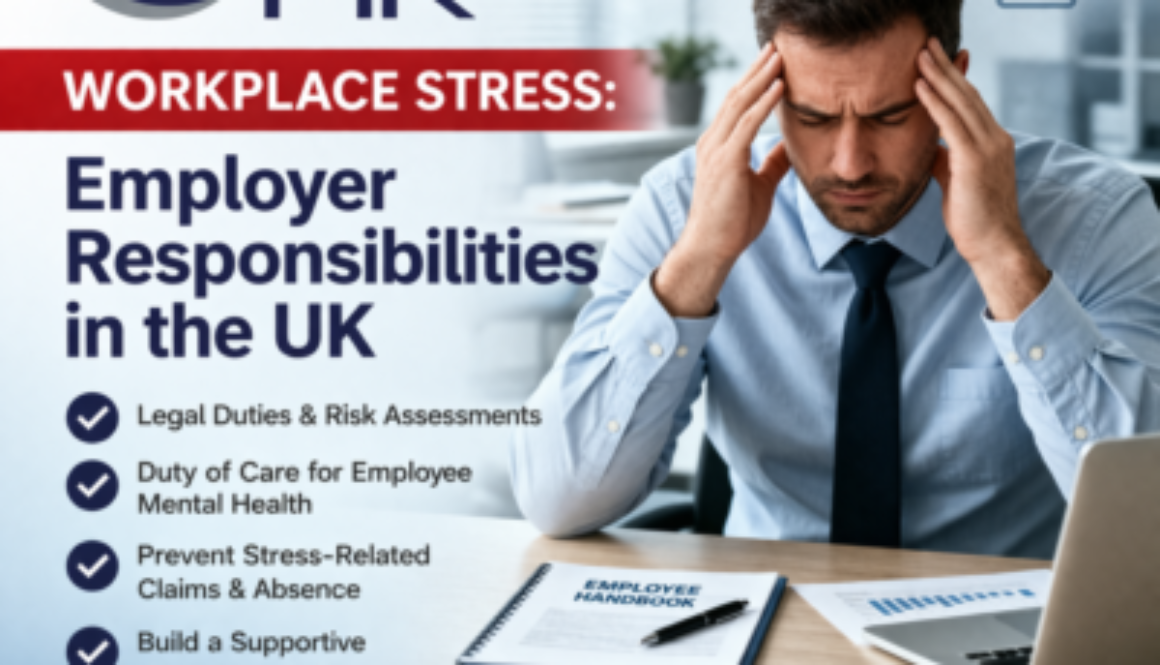
Workplace Stress: Employer Responsibilities in the UK
📘 Thursday Blog
Awareness Day: Stress in the Workplace – A Growing Employer Risk
Why this matters
Workplace stress is now one of the leading causes of absence in the UK and is increasingly linked to:
- Mental health claims
- Constructive dismissal
- Disability discrimination
Employer responsibilities
Under UK law, employers must:
- Provide a safe working environment
- Conduct stress risk assessments
- Act on signs of employee mental health concerns
Failure to do so can lead to:
❌ Legal claims
❌ Increased absence
❌ Reduced productivity
Best practice approach
At Consensus HR, we recommend:
✔ Regular 1-2-1 meetings
✔ Mental health awareness training
✔ Clear reporting processes
✔ Supportive workplace culture
👉 https://www.consensushr.com/training-development/
Matthew Chilcott’s Comment
“A positive workplace culture is not just good for people – it’s critical for business performance. Employers who ignore stress risks are exposing themselves to both legal and commercial consequences.”
How we support employers
Your Outsourced Human Resources (HR) Department.
For further information on any of the HR subjects we provide, please click the heading below: