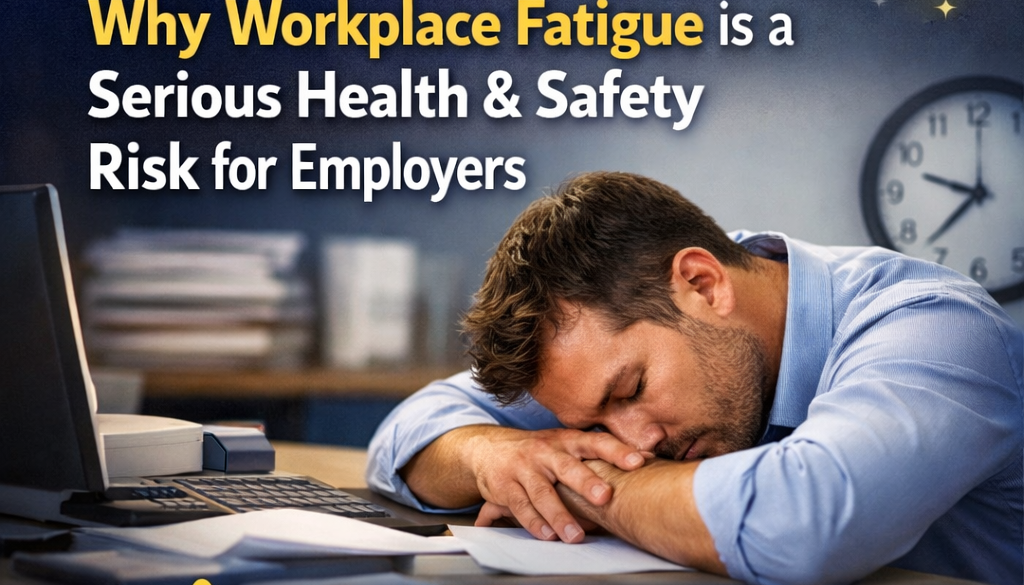
World Sleep Day: Why Workplace Fatigue is a Serious Health & Safety Risk for Employers
THURSDAY BLOG
World Sleep Day: Why Fatigue Management Matters in the Workplace
Every year, organisations recognise World Sleep Day, a global awareness campaign highlighting the importance of healthy sleep.
For employers, sleep and fatigue are important workplace considerations, particularly where safety, productivity and wellbeing are concerned.
Why Sleep Matters at Work
Fatigue can significantly impact workplace performance and safety.
Poor sleep can lead to:
• reduced concentration
• increased risk of accidents
• lower productivity
• higher sickness absence
In some industries, such as transport, healthcare and manufacturing, fatigue management is particularly important.
Employer Responsibilities
Under UK health and safety legislation, employers must ensure the health, safety and wellbeing of employees while at work.
This includes considering risks associated with:
• long working hours
• shift work
• night work
• excessive workloads
Employers should also ensure compliance with the Working Time Regulations 1998, which set limits on working hours and rest breaks.
Practical Steps Employers Can Take
Employers can help reduce fatigue by:
• encouraging regular breaks
• managing working hours effectively
• supporting employee wellbeing initiatives
• ensuring workloads are reasonable
• promoting a healthy work-life balance
Comment from Matthew Chilcott – Owner, Consensus HR
“Employee wellbeing plays a significant role in workplace performance and safety. Employers who support healthy working practices often see improvements in productivity, engagement and overall workplace culture.”
Learn more about HR support:
https://www.consensushr.com
Follow Consensus HR
LinkedIn
https://www.linkedin.com/company/consensus-hr
Facebook
https://www.facebook.com/ConsensusHR
Twitter/X
https://twitter.com/ConsensusHR
Your Outsourced Human Resources (HR) Department.
For further information on any of the HR subjects we provide, please click the heading below: